
A free Iran is their shared dream. But the diaspora remains torn on the best path forward.
A Free Iran Is Their Shared Dream. But the Diaspora Remains Torn on the Best Path Forward
Los Angeles: A Divided Diaspora
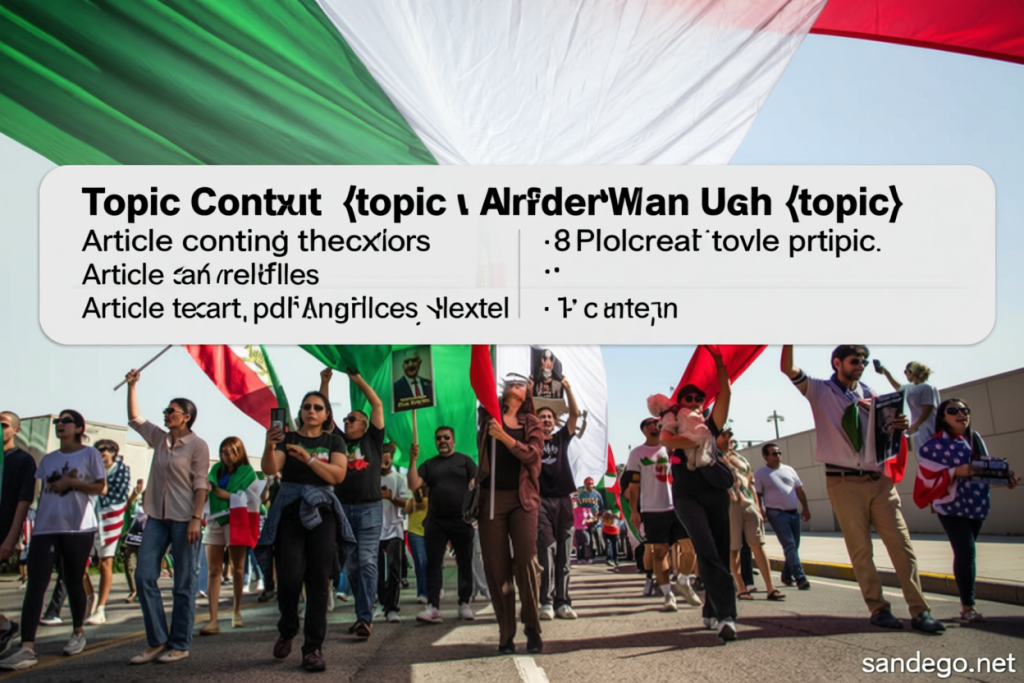
Just outside City Hall in Los Angeles, countless Iranian Americans demonstrated against the initiation of an unapproved war. They echoed “Stop the war in Iran” and “We the people don’t want war.” Meanwhile, on the Westside, in the neighborhood dubbed “Tehrangeles,” a similar group of diaspora members reveled in the possibility of toppling the theocratic regime. They waved American, Israeli, and Iranian flags, danced to energetic music, and celebrated the news of Ayatollah Ali Khamenei’s death in the U.S.-Israeli strike.
Contrasting Sentiments Amid Escalating Tensions
The emotional split among Iranians in the diaspora has grown sharper as Middle Eastern violence intensifies. Families who fled the 1979 Islamic Revolution’s rule now find themselves at odds over the best way to achieve freedom. “Some people are so resentful toward this regime that they insist, ‘At any cost, come and destroy this regime even if it means damaging parts of the country,’” explained Abbas Milani, a Stanford University expert in Iranian studies.
Others, however, advocate for regime change without sacrificing the country’s stability. This divergence contrasts with earlier this year, when the diaspora appeared united in backing protesters against the government’s harsh measures. The current discourse highlights how the same objective—freedom for Iran—can lead to starkly different strategies.
Online Debates and Leadership Uncertainty
Since the attack on Iran, debates online have intensified. Supporters of military action are increasingly tagged as “Zionists,” a term that has gained negative connotations following Hamas’s assaults on Israel in October 2023. Meanwhile, anti-war voices face accusations of favoring the regime. The conversation also centers on who should lead Iran after the current government’s collapse. While some advocate for Reza Pahlavi, the heir to the last shah, others remain cautious about reinstating former monarchy ties.
Current Crisis and Symbolic Moments
Amid the rising casualties in Iran, a government-imposed internet blackout has disrupted communication between families. The upcoming Nowruz, a time for renewal and celebration, now casts a shadow as rumors suggest Mojtaba Khamenei, Khamenei’s son, may take over leadership. Analysts warn that the Islamic Revolutionary Guard Corps could consolidate its influence if it endures the current conflict.
Trump’s Vision and Public Sentiment
President Donald Trump has proposed removing Iran’s leadership entirely, naming potential candidates for a “good leader.” Despite this, a recent NBC News poll shows 54% of American voters disapprove of his approach to the crisis. This mirrors the diaspora’s internal division, with 53% opposing U.S. military action, as found in a prior NIAC-YouGov survey. (Jamal Abdi, NIAC’s president, noted new poll results will be shared next week.)
A Pluralistic Perspective
The Iranian Diaspora Collective, an Instagram platform with 81,000 followers, emphasized the diversity within the community. “We are not a monolith,” they wrote in a post. “Millions of people will never share the same ideology or identity, and that plurality is the strength of any free society.”
A Pastor’s Lament
A Los Angeles-based pastor, Ara Torosian, a Christian who left Iran in 2010, expressed sorrow over the destruction of historic sites and the loss of innocent lives, particularly children. Yet, he argued that the suffering endured by dissidents under the regime has been outmatched by the current devastation. Torosian recounted being imprisoned and beaten in Tehran for possessing Christian items, a memory that deepened his relief at Khamenei’s death. “This is not the first time we’ve seen turmoil,” he said, “but the pain now feels like a reckoning.”
