
‘We can’t take it anymore’: How Trump is pushing Cuba to the brink
‘We can’t take it anymore’: How Trump is pushing Cuba to the brink
A Cuban’s Desperate Plea
On a bustling Havana street, a man approached me quietly, his voice barely audible. “Let the Americans come, let Trump come, it’s time to get this over with,” he murmured, as if revealing a long-held truth. This sentiment carries weight in a nation enduring relentless economic strain, compounded by the aggressive measures of a U.S. president. I glanced around, wary of eavesdroppers, and checked if my cameraman—documenting the transportation crisis—was close enough to capture his words. “People can’t feed their families,” he added, his frustration palpable.
“We can’t take it anymore,” he continued, his voice steady but heavy with resignation.
A Legacy of Crisis
Since Fidel Castro’s revolution in 1959, Cuba has weathered decades of turmoil. From failed CIA attempts to invade to the 1962 missile standoff, the island has remained a focal point of global tension. Now, Donald Trump’s policies threaten to reignite that fervor. In a recent interview with CNN’s Dana Bash, Trump declared, “Cuba is going to fall soon,” a claim that echoes past U.S. rhetoric but gains urgency from the precision of his sanctions.
The Economic Strain
Trump’s oil embargo, imposed with surgical efficiency, has crippled Cuba’s economy. The nation’s leaders, once resilient against decades of American pressure, now face a new challenge. Unlike the 1962 crisis, which saw naval blockades, the current approach cuts off fuel supplies without halting trade. As a result, oil from Cuba’s last remaining allies has dried up, leaving hotels built at public expense standing vacant and tourists dwindling.
Living in the Shadows of Blackouts
Power outages, once brief, now stretch for days. When the lights flicker on, it’s often in the dead of night, forcing Cubans to rise and cook, iron, and work under dim, unreliable conditions. During a recent 36-hour blackout, a group of men cooked a pot over burning tree limbs on Havana’s main avenue, their actions a testament to survival. “We have returned to the Stone Age,” one man joked, his tone a mix of exhaustion and hope.
Struggle for Fuel
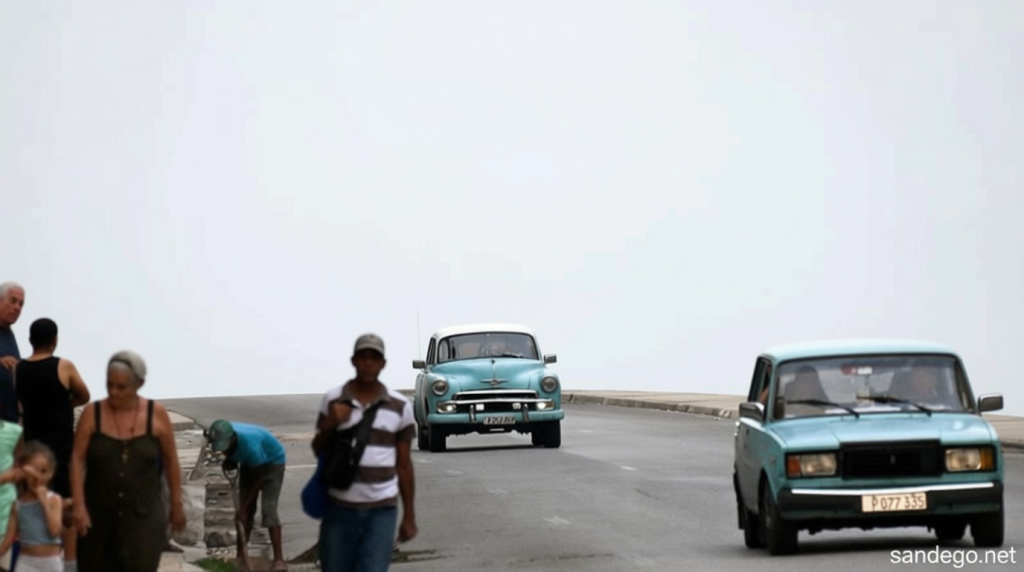
With no gasoline available, roads are nearly empty. The few cars that remain—government rentals for tourists—are prioritized at state gas stations. Cubans have turned to siphoning fuel from these vehicles to sell on the black market, where a single tank costs over $300—more than the average annual income. Scavenging through trash for food has become a daily ritual, sometimes involving children.
A Nation’s Resolve
Despite the hardship, Cuban officials remain defiant. “Cuba is not alone,” the government insists, though the island now feels isolated. Their slogans still echo with determination: “The homeland or death. We will be victorious!” Yet, many Cubans, weary from years of sanctions, are simply hoping for a shift—whether it’s from Trump’s policies or a new leader.
When my cameraman finally rejoined me, I asked the taxi driver if he wished to share his thoughts for the story. He hesitated, then walked away, choosing to keep his complaints quiet for now.
