
Sudan war: Why Hemedti’s legitimacy push in Uganda falters amid RSF atrocities
Sudan War: Why Hemedti’s Legitimacy Push in Uganda Falters Amid RSF Atrocities
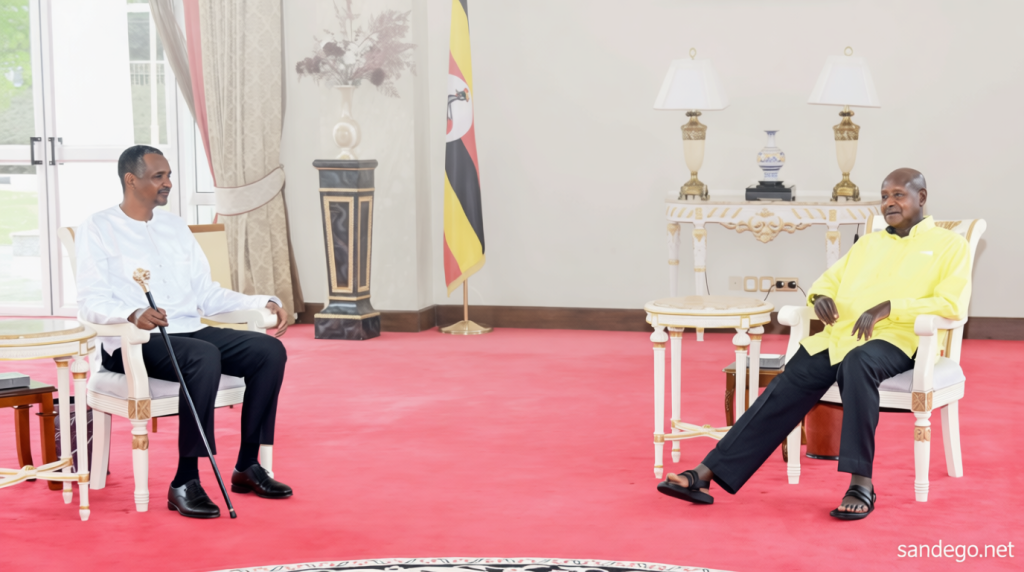
February 20 marked a pivotal moment as Mohamed Hamdan Dagalo, the commander of Sudan’s Rapid Support Forces (RSF) known as Hemedti, arrived in Kampala, Uganda. This was his most notable diplomatic appearance outside Sudan in several months.
Just a day after a UN investigation uncovered evidence of genocide by the RSF in Darfur, the U.S. imposed sanctions on three RSF leaders for their role in atrocities in el-Fasher. The visit occurred amid a backdrop of ongoing global criticism of the RSF’s actions, including a December 2023 U.S. ruling that classified RSF conduct in Darfur as ethnic cleansing.
Hemedti did not arrive solo. He was accompanied by individuals tied to the parallel political framework he helped establish in Nairobi, termed “Tasis.” This initiative aimed to reframe RSF-controlled regions as civilian-led administrative alternatives. Despite its efforts, Tasis failed to gain widespread political backing within Sudan and was largely dismissed by governments, regional organizations, and international bodies, including the UN.
The Sudanese government denounced Uganda for welcoming Hemedti, calling the gesture an affront to both the Sudanese populace and the global community. This move signals Kampala’s growing role as a secondary stage for Hemedti’s ambitions, beyond a mere courtesy visit.
The Tasis Initiative
Hemedti’s entourage included figures from the Tasis project, which sought to present RSF governance as an alternative to the central government. While this effort underscored the RSF’s political aspirations, it struggled to align with broader Sudanese political factions, remaining a marginalized concept.
Uganda’s Strategic Role
Uganda’s choice to host Hemedti was deliberate. Museveni has long championed “African solutions to African problems,” and the country’s neutral stance in Horn of Africa diplomacy made it an ideal partner. By welcoming Hemedti, Uganda positioned itself as a potential mediator without committing to a specific Sudanese side.
The visit also aimed to distance the RSF from Nairobi’s influence, where Tasis had limited appeal. Kampala provides a fresh stage for RSF narratives, free from the shadows of prior political struggles.
Rebuilding Narratives
During his time in Kampala, Hemedti emphasized national unity and resistance to division, positioning the conflict as a battle against entrenched Islamist networks. He framed himself as a proponent of civilian-led governance, even as the RSF expanded its administrative control in occupied territories.
His claims of military strength—asserting that RSF ranks have surpassed half a million—were tailored to reinforce internal support and project influence beyond Sudan. This dual strategy of domestic positioning and regional outreach highlights the RSF’s evolving role as a political actor.
A Fractured Path
“African solutions to African problems” — a slogan often repeated by Museveni, now echoed in Hemedti’s bid for recognition.
Despite this, a contradiction emerges. A commander of a force accused of widespread abuses is championing democracy while leading a parallel political structure. This duality questions the RSF’s transition from military power to political legitimacy, as it seeks to maintain autonomy.
Analysts at the International Crisis Group have warned that Sudan’s conflict is no longer solely about Khartoum’s survival but about competing claims to sovereignty. Prolonged power-sharing dynamics in African conflicts often result in lasting fragmentation, a risk the RSF may be testing.
Hemedti’s visit to Uganda serves two key objectives: restoring the RSF’s image under international scrutiny and establishing diplomatic normalcy as a political entity. This aligns with broader mediation efforts involving the African Union and the Intergovernmental Authority on Development (Igad), though Uganda’s involvement adds a layer of symbolic credibility to the RSF’s cause.
