Former Olympic Canoeist Indicted for Alleged Damage to Reflecting Pool
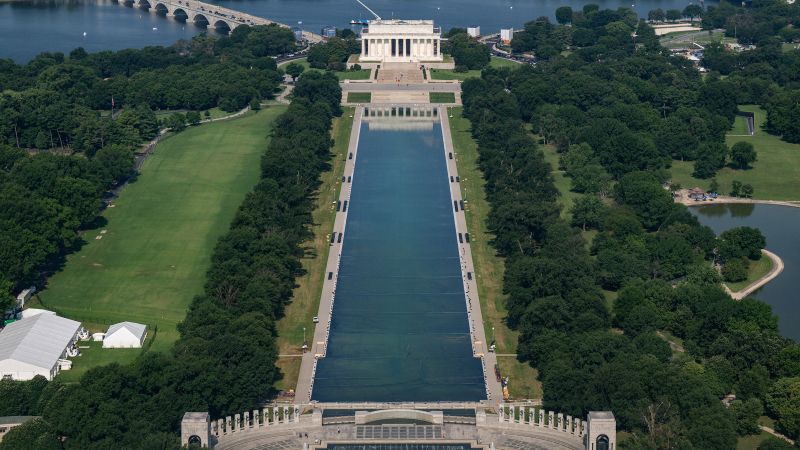
Sandego.net – David Hearn, a former Olympic canoeist, has been formally charged with a felony after being arrested in June when he reached into the Reflecting Pool near the Lincoln Memorial in Washington, D.C. The indictment, announced by the DC Superior Court on Thursday, alleges that Hearn “maliciously did injure, break and destroy certain property, that is, the lining material of the Lincoln Memorial Reflecting Pool.” The charge of destruction of property with a value exceeding $1,000 carries a potential maximum penalty of 10 years in prison if he is convicted.
According to the indictment, the grand jury found that Hearn’s actions constituted intentional damage to a national monument. This marks a notable escalation by the Trump administration, which has reclassified the peeling bottom layer and algae growth in the pool as acts of serious vandalism following the president’s recent renovation efforts. The case has drawn attention to the political implications of the damage, with critics suggesting it reflects a broader strategy to attribute public failures to individual acts of misconduct.
During a press briefing, US Attorney Jeanine Pirro described the incident as a deliberate act, emphasizing that Hearn had “violently” removed about two square feet of the pool’s lining. She also noted that Hearn had been “belligerent and rude” toward federal officers guarding the site. Pirro maintained that the decision to pursue a felony charge was based on the strength of the evidence, stating, “This is a case with tremendous evidence and the evidence dictates where we land.” While she acknowledged the presence of witnesses who observed the damage, she did not elaborate on their accounts, calling them “unbiased” individuals simply performing their duties.
“Davey Hearn is innocent. These charges are outrageous and should be alarming to every American. This indictment reflects the Administration’s effort to shift blame for their own failures,” said Hearn’s attorney, Norm Eisen. He added, “On the eve of our nation’s Independence Day, Americans should be deeply concerned by the misuse of government power against an ordinary citizen based on a concocted narrative.”
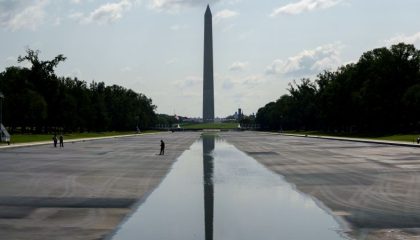
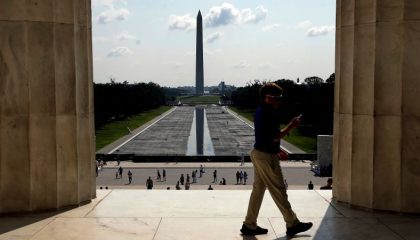
The incident occurred shortly after the pool’s reopening last month, following a multimillion-dollar renovation initiative by President Donald Trump. Hearn claimed he was merely curious about the peeling material on the pool’s base when he touched a flap that had partially detached. He reported that a National Park Service worker had warned him not to enter the water before he was handcuffed by Park Police. “I was just checking out the problem,” Hearn stated, insisting he had no intention of damaging the monument.
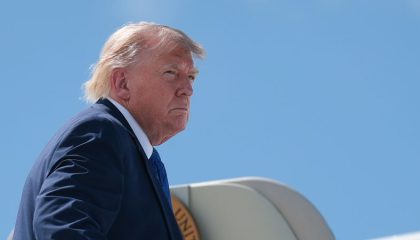
Trump had previously condemned the condition of the pool, labeling it a “debacle” and warning that those responsible for the damage would face severe consequences. In late June, the president emphasized that vandals could be subjected to lengthy prison sentences, a stance that aligns with the felony charge filed by the US Attorney’s office. Pirro, however, noted that there are “about a half dozen” other cases under investigation, some of which may be classified as misdemeanors or lesser violations. “We have about a half dozen other cases. Some are classified as misdemeanors, while others could be categorized as violations,” she stated.
The renovation, which was intended to be completed in time for the Independence Day weekend, faced criticism over its immediate results. Within days of reopening, the pool was already showing signs of deterioration, including algae growth and paint peeling. Pirro confirmed that the US Attorney’s office is examining these issues as part of a broader