Iran Sends a Defiant Message to Trump with Colossal Funeral for Slain Supreme Leader Ali Khamenei
Sandego.net – Four months after his assassination marked the opening salvo of the US-Israeli campaign against Iran, Supreme Leader Ali Khamenei is being honored in a sweeping, multi-city funeral that spans five locations across two nations. The event, set to last for a full week, is expected to draw millions of mourners, many traveling from distant regions to participate in the elaborate tribute. The funeral’s timing, coinciding with the 250th anniversary of American Independence Day, adds a layer of symbolic significance, contrasting Iran’s solemn remembrance with the United States’ celebration of its own historical milestones.
A Symbolic Spectacle in the Shadow of War
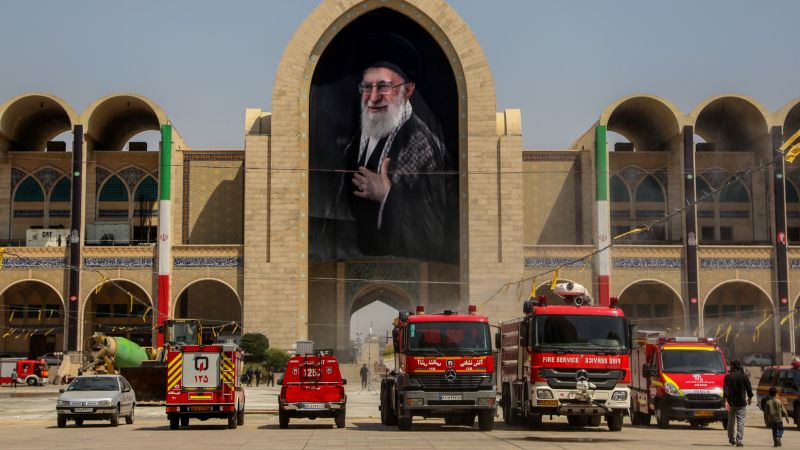
The funeral, which has dominated Iranian media coverage for over a decade, is more than a mere farewell—it is a statement of resilience. Despite the devastating toll of the war, which has strained Iran’s economy and tested its military capabilities against formidable adversaries, the regime has poured immense resources into crafting a ceremony that reinforces its ideological foundations. The event’s scale, including the mobilization of government workers, educators, and religious devotees, underscores a strategic effort to project unity and strength in the face of external challenges.
The chosen dates for the procession carry deliberate meaning. Khamenei’s body will be displayed in state on the 250th anniversary of the United States’ declaration of independence, a day that resonates deeply with Iranian nationalism. This timing is also aligned with a pivotal Shiite religious observance, commemorating the martyrdom of Imam Hussein, a revered figure in Shia tradition. The overlap of these two narratives—nationalist defiance and religious mourning—creates a powerful visual and symbolic framework for the funeral, intertwining Iran’s spiritual identity with its political struggle against Western powers.
Iran’s logistical preparations for the event are unprecedented. Officials have coordinated the efforts of diverse groups, including labor unions, military personnel, and aid workers, to ensure seamless organization. The use of religious mourning groups, who have historically played a key role in mobilizing crowds, further highlights the event’s integration of faith and political messaging. These groups, known for their devotion and fervor, will lead processions through Iran’s major cities and holy sites in Iraq, ensuring that the funeral remains a deeply communal experience.
A Defiant Legacy in Death
“We must rise and raise the cry for the nation’s blood to the world so that the world knows that the honorable and noble nation of Iran does not remain silent in the face of oppression… and will not let go of the blood of its Imam (Khamenei),” wrote Mohammad Bagher Ghalibaf, the influential parliamentary speaker leading Iran’s negotiations with the United States. His words, published by state media, capture the essence of the funeral’s purpose: to reaffirm Iran’s commitment to its leadership and to assert its cultural and religious sovereignty.
“An epic feat that will show the greatness of a nation’s spirit to the world.”
The funeral also serves as a platform for Iran’s new Supreme Leader, Mojtaba Khamenei, to make his first public appearance after months of secrecy following his father’s assassination. This debut, while seemingly humble, is laden with political weight, signaling a transition in leadership and a reaffirmation of the Khamenei family’s enduring influence. The event’s logistical complexity, however, has raised concerns about its safety, echoing past challenges during similar ceremonies.
Khamenei’s death, which occurred on February 28, has transformed him into a martyr, a status that amplifies his symbolic power. His leadership was characterized by unwavering opposition to the West, a stance that has been both a source of unity and division within Iran. The assassination, carried out by the US and Israel, has not only elevated his stature but also inspired widespread anti-regime protests, which he suppressed with force. This duality—of being both a target and a unifying figure—has shaped the funeral’s narrative, positioning Khamenei as a victim of imperial aggression rather than a fallen leader.
Historical Precedents and Modern Implications
The funeral’s grandeur draws comparisons to two previous large-scale tributes: those of the Islamic Republic’s founder, Ayatollah Ruhollah Khomeini, in 1989, and the burial of Quds Force commander Qassem Soleimani in 2020. Both events were marked by massive crowds, but also by chaos, including deadly crushes at the sites where the leaders’ bodies were displayed. Khomeini’s funeral, for instance, saw his casket removed by helicopter after mourners overwhelmed the venue, a situation that foreshadows the challenges Iran now faces in managing its current ceremony.
While the logistics have been refined, the emotional intensity of the event remains unchanged. The funeral’s timing during the Islamic month of Muharram, a period of profound mourning in Shia Islam, reinforces its religious dimension. This month is associated with the martyrdom of Imam Hussein, whose sacrifice during the Battle of Karbala is a cornerstone of Shia identity. By linking Khamenei’s death to this historical event, the regime seeks to frame his legacy within a broader spiritual context, ensuring that his image endures as a symbol of resistance.
The funeral’s impact extends beyond domestic unity. It is designed to send a message to the world, particularly to the United States and Israel, that Iran’s leadership remains unbroken despite the war. The scale of the tribute, which includes tribute songs, documentaries, and public displays of grief, underscores a deliberate effort to counterbalance the narratives of US media, which had previously focused on diplomatic talks between Iran and the West. This shift in focus highlights the regime’s strategy of using the funeral as a tool to reaffirm its position in the global arena.
Analysts note that the funeral’s symbolism is meticulously crafted. By placing Khamenei’s body in state on the anniversary of American Independence Day, the event juxtaposes the West’s celebration of freedom with Iran’s mourning of a leader who embodied defiance against Western dominance. This contrast is further emphasized by the alignment of the procession with a major Shiite religious commemoration, which serves to reinforce the idea that Khamenei’s death is not just a political loss but a spiritual victory.
The funeral is also a testament to the regime’s ability to adapt and endure. Even as it faces economic hardship and international pressure, Iran has managed to orchestrate a spectacle that celebrates its cultural and religious heritage. This resilience, however, is not without its risks. The sheer size of the gathering could lead to logistical challenges, including traffic congestion, security concerns, and the potential for public unrest if the event’s messaging resonates differently with various factions within Iran.
As the world watches the funeral unfold, it is clear that Iran sees this moment as a defining one. The event is not just a tribute to a leader but a declaration of the regime’s enduring strength. By immortalizing Khamenei in this way, Iran aims to solidify its narrative of resistance and to inspire future generations of supporters, ensuring that his legacy remains a cornerstone of the nation’s identity for years to come.