Authorities say man who flew plane into Beijing skyscraper previously expressed suicidal thoughts
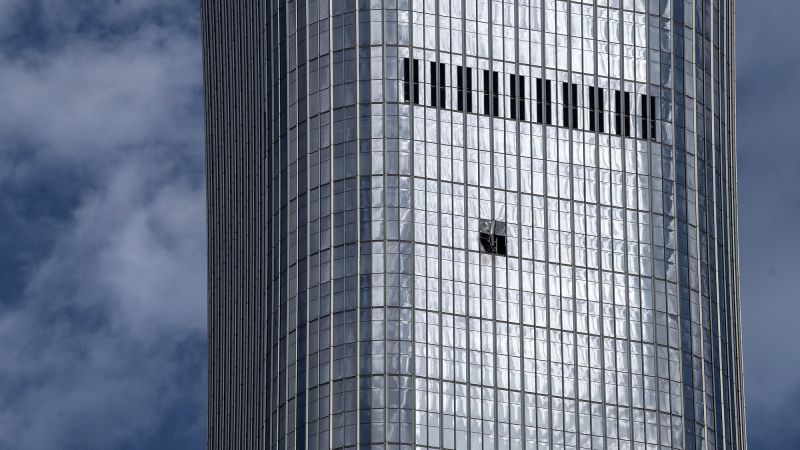
Sandego.net – Chinese authorities confirmed on Thursday that a 66-year-old man, identified as Liu, had previously expressed suicidal thoughts before piloting a plane into Beijing’s tallest skyscraper. The incident, which unfolded on Friday evening, sent shockwaves through the city as a small aircraft collided with the 109-story CITIC Tower, a towering landmark that dominates the capital’s skyline. The crash resulted in the pilot’s death and injuries to 13 others, sparking widespread speculation about the man’s identity and the motives behind his actions.
The Crash and Its Aftermath
The collision occurred during the late afternoon, as the plane approached the Central Business District. According to the Chaoyang District government’s statement, the aircraft originated from a general aviation airport in northeastern Beijing and was initially flown with a companion. However, the pilot, Liu, took off alone after separating from his passenger, deviating from the designated flight path and losing contact with air traffic control. The plane’s final moments were captured in footage that showed it hurtling toward the CITIC Tower, a building that stands at 528 meters tall and houses major corporations and foreign embassies.
State media initially remained silent on the incident, with CCTV, the country’s national broadcaster, headquartered just across the street from the crash site, failing to mention it for nearly 24 hours. This silence fueled public curiosity and raised questions about the extent of information control in the aftermath of the tragedy. By Thursday, authorities released additional details, including the pilot’s name and his personal history. The crash had been strictly censored, leaving many to wonder whether the government was trying to manage the narrative or conceal critical information.
The Pilot’s Background and Mental Health
Liu, a self-employed individual, had recently gone through a divorce and lived alone in the city. His personal struggles were reportedly compounded by chronic insomnia and anxiety, conditions he documented in his diary. Citing entries that referenced “ending (his) life,” officials stated that Liu had shown signs of distress before the incident. The government’s statement also noted that the crash was classified as a case of endangering public safety due to personal reasons, emphasizing that the pilot’s actions were not the result of a mechanical failure or external sabotage.
Investigators have since concluded that Liu’s decision to fly the plane into the CITIC Tower was deliberate. The aircraft, a domestically produced Sunward SA60L Aurora, was described as a two-seater model, suggesting that the pilot’s solo flight may have been a calculated move. While the exact sequence of events remains under scrutiny, the government highlighted that Liu had obtained his first pilot license just five years prior in 2021, raising questions about his experience and training.
Chinese officials have not yet provided a detailed explanation of why Liu chose the CITIC Tower as his target. However, the building’s prominence in the city’s skyline and its location in a densely populated area likely played a role in the choice. The crash not only destroyed the aircraft but also left debris scattered across the streets below, with fragments of glass and metal parts falling hundreds of feet. The scene was described as chaotic, with office workers caught off guard by the sudden impact of the plane, which occurred just as they prepared to leave for the weekend.
Social Media and Information Control
Following the crash, Chinese social media platforms were quickly inundated with posts, videos, and discussions. However, within hours, the content was systematically removed, leaving only a handful of user-generated videos available. This rapid censorship suggested a coordinated effort to limit the spread of information and prevent public unrest. The incident became a focal point for online speculation, with users debating whether the pilot had acted out of desperation or had a hidden agenda.
Experts noted that the crash occurred in a time of heightened public awareness about aviation safety, particularly after a series of recent incidents in China. The CITIC Tower, a symbol of modern Beijing, was not only a hub for business but also a structure that had been subjected to strict air defense protocols. The collision raised concerns about the effectiveness of these measures, especially in the face of an unexpected maneuver by a small aircraft.
Despite the initial silence from state media, the pilot’s identity and background were eventually revealed through official statements. Liu’s solo flight and the absence of any distress signals before the crash have led to theories about his mental state. Some have speculated that his insomnia and anxiety, coupled with his recent divorce, contributed to a breakdown in his ability to focus or maintain control. Others have questioned whether the incident was a deliberate act of protest or a personal tragedy that took a tragic turn.
Public Reaction and Implications
The crash sparked a wave of concern among residents and visitors alike. The CITIC Tower, a landmark known for its advanced security systems, became a symbol of vulnerability in the face of human error. Office workers, many of whom had never seen a plane crash so close, were left in a state of shock. The incident also highlighted the fragility of public safety in urban environments, where the convergence of air and ground traffic can lead to unforeseen disasters.
Authorities have since emphasized that Liu’s actions were a personal choice, not an attack on the government or a political statement. However, the rapid removal of social media content has fueled doubts about transparency. Some have argued that the government’s delay in acknowledging the crash was an attempt to control the narrative, while others believe it was a necessary step to avoid panic in the days leading up to the 2026 Summer Olympics in Beijing.
As investigations continue, the incident serves as a reminder of the complex interplay between individual mental health and public safety. Liu’s story, from his early days as a pilot to his final moments in the sky, has captured the imagination of many. The crash, though tragic, has also sparked a broader conversation about the need for improved mental health support and more open communication during times of crisis.
Meanwhile, the city’s air defense systems have come under scrutiny. While the CITIC Tower is equipped with state-of-the-art technology, the pilot’s ability to bypass controls and hit the building with such precision has raised questions about the protocols in place. Officials have stated that the incident was an anomaly, but the public remains divided on whether it was a one-off event or a sign of larger systemic issues.
In the days following the crash, the media has been closely following the story, with analysts and experts offering their perspectives. The pilot’s background, mental health struggles, and the circumstances of the crash have become a case study in how personal factors can lead to large-scale disasters. As the investigation progresses, the hope is that it will provide clarity on the events of Friday evening and help prevent similar incidents in the future.
The CITIC Tower, once a symbol of Beijing’s technological prowess, now stands as a testament to the unpredictable nature of human actions. For the 13 injured individuals, the crash was a harrowing experience that left them with both physical and emotional scars. Yet, the city’s resilience remains evident, as residents and officials alike work to move forward from the tragedy.