
Opalite Music Video: Meaning, Visual Style, and Story Explained
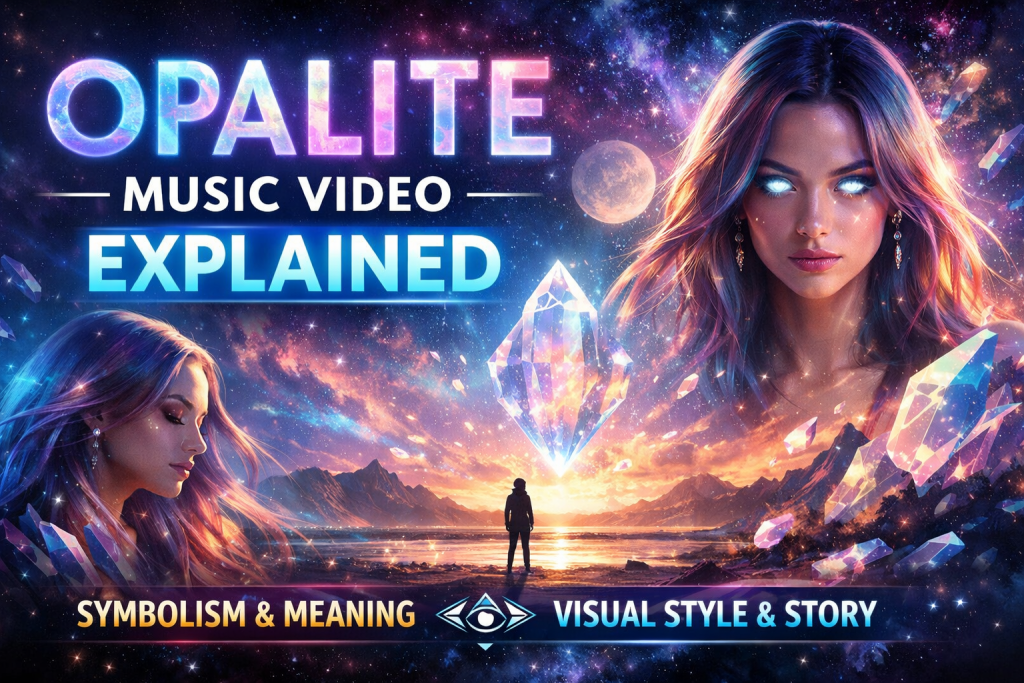
The opalite music video is built to be watched like a short film: it gives you enough story to follow, but leaves key details deliberately open so the viewer has to interpret the symbolism. On the surface, it looks like a surreal sequence of rooms, reflections, and shifting light. Underneath, it’s a visual metaphor about identity, emotional transformation, and the fear of becoming someone you don’t recognize.
If you came here to understand what the opalite music video “means,” the most accurate answer is this: it tells a story about a person moving through stages of emotional change, using opalite as the central symbol for fragile beauty, illusion, and rebirth. The video’s strength is that it doesn’t explain itself in dialogue. It explains itself in color, motion, framing, and repetition.
What the Opalite Music Video Is Really About
At its core, the opalite music video is structured around the idea of a “self” that is breaking apart and rebuilding. The protagonist is not traveling through a normal physical space. They are moving through an internal landscape, where each location represents a different psychological state.
The video repeatedly shows moments where the character hesitates before entering a doorway, touching an object, or facing a reflection. This is not random. It’s a pattern that mirrors emotional decision-making: the moment right before you accept change is usually the most frightening.
A key theme is the tension between control and surrender. In many scenes, the protagonist tries to hold on to something stable, but the world around them keeps shifting. That constant instability is the point. It communicates the feeling of transformation as something you can’t fully manage.
The Symbolism of “Opalite” in the Video
Opalite is a material associated with a soft glow and shifting colors, often resembling a dream-like version of a gemstone. In symbolism, it can represent illusion, transition, and emotional clarity that arrives slowly rather than instantly.
In the opalite music video, the opalite imagery works in two directions. First, it suggests beauty and hope: a gentle light that guides the protagonist forward. Second, it suggests deception: the glow is attractive, but it can also distract you from reality.
The video often places opalite-like light on skin, glass, or water. These are surfaces that reflect and distort. That’s an intentional visual language: it’s saying the protagonist is in a stage where they can’t fully trust what they see, including their own self-image.
Opalite also connects to the idea of “synthetic authenticity.” It looks like a gemstone, but it is not a natural opal. This becomes a metaphor for a person who feels real emotions but worries that their identity is “constructed” rather than genuine.
Visual Style Explained: Lighting, Color, and Camera Language
The most striking element of the opalite music video is the lighting. The glow is not just aesthetic decoration. It is the storytelling device. The lighting changes depending on the emotional tone of each scene, and the shifts are usually subtle rather than dramatic.
You’ll notice the video uses cool tones during scenes of uncertainty and isolation. Then it moves into warmer, more iridescent tones when the character begins to accept change. This creates an emotional rhythm: confusion → confrontation → release.
The camera language also matters. Many shots are framed with strong symmetry, which creates a sense of control and structure. But as the story progresses, the framing becomes less stable. The camera begins to drift, tilt, or move in ways that feel less predictable.
This is how the video shows psychological movement without needing exposition. The viewer feels the shift because the visual grammar changes. The opalite music video is essentially telling you: the character’s inner world is reorganizing, and the camera is reacting to that.
The Story Breakdown: Scene Progression and Narrative Arc
Even if the opalite music video feels abstract, it still follows a narrative arc. It starts with separation, moves into confrontation, and ends with transformation. The story is less about events and more about emotional stages.
In the early scenes, the protagonist is usually alone. Their environment feels clean but empty, like a place designed for someone else. This communicates disconnection: the character is present, but not fully living inside their own life.
Midway through the video, the protagonist encounters versions of themselves through mirrors, shadows, or doubles. These are not just stylistic choices. They represent fragmented identity, where a person feels split between who they were, who they are, and who they might become.
Toward the final act, the video becomes more fluid. Movement increases, lighting becomes more layered, and the protagonist stops resisting. This is the moment where the story resolves. The “ending” is not about victory. It’s about acceptance: the protagonist becomes comfortable with uncertainty.
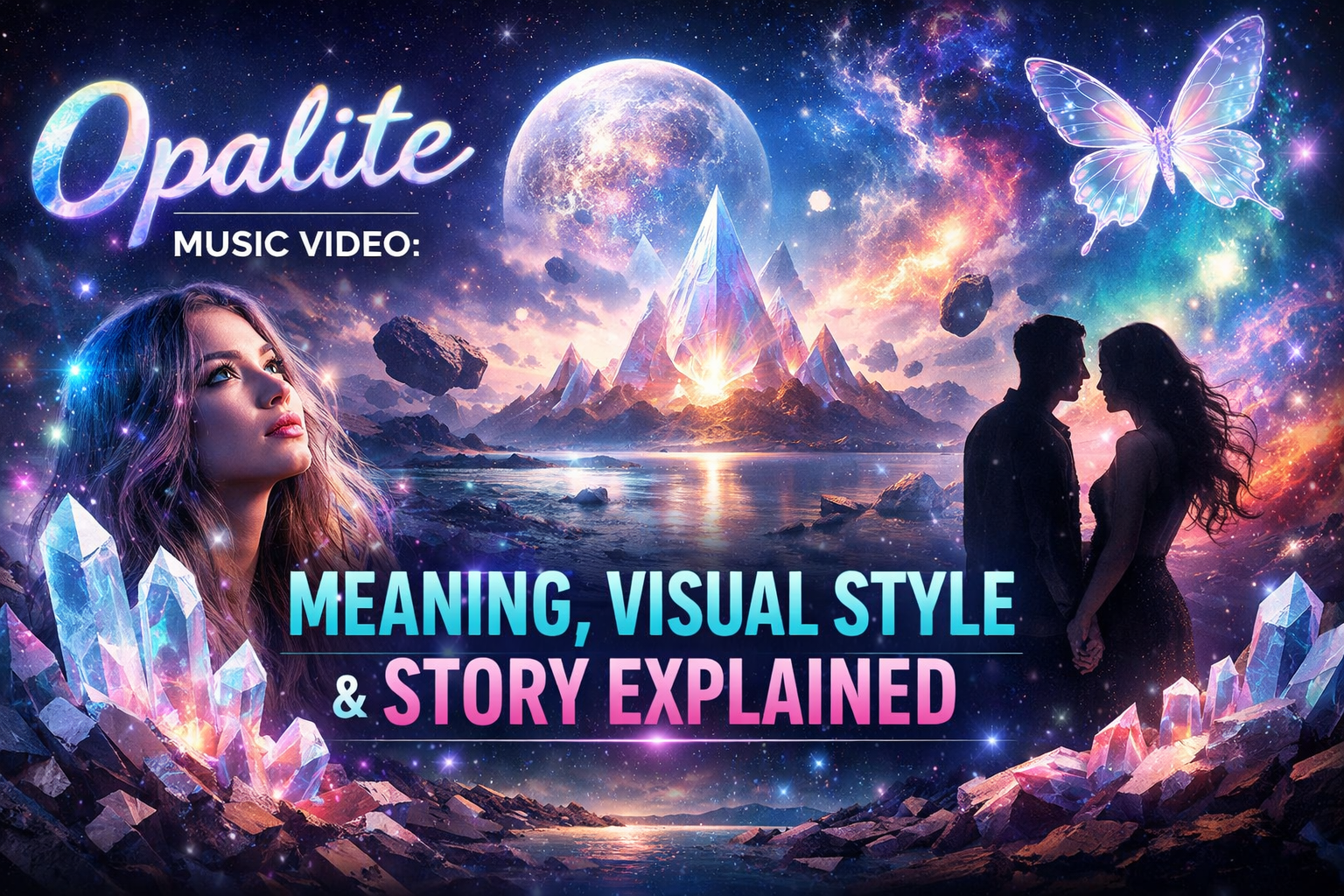
The video’s climax is usually not a loud moment. It’s a quiet shift. That is a deliberate storytelling decision, because real personal transformation rarely looks cinematic. It often looks like stillness after chaos.
Key Themes: Identity, Memory, and Emotional Rebirth
The opalite music video works because it uses universal themes, but communicates them in a personal way. The strongest theme is identity, specifically the fear that identity is unstable. The video repeatedly suggests that the self is not a single object. It is a process.
Another theme is memory. Certain shots feel like flashbacks, even if they are not explicitly labeled. The video often uses slow motion or softened focus when referencing past moments, which makes them feel like memory fragments rather than current reality.
There is also a theme of emotional rebirth. The protagonist’s journey is not about returning to who they used to be. It’s about becoming someone new without losing their emotional truth. This is why opalite is such a fitting symbol: it looks like it contains many colors at once.
The video also implies that healing is not linear. You see repeated actions, repeated spaces, and repeated imagery. That repetition is not filler. It represents the way people revisit the same emotional problems until something finally shifts.
Why the Ending Is Ambiguous (and Why That’s the Point)
Many viewers finish the opalite music video and feel unsure what “really happened.” That is not a flaw. It is a structural choice. The video is not designed to provide a literal conclusion. It is designed to create a feeling of closure without spelling out the facts.
The ending often suggests that the protagonist has crossed a threshold. The lighting becomes calmer, the movement becomes smoother, and the framing becomes more open. These are all signals that the character has changed internally.
But the video avoids showing a clear “after” life. That keeps the story honest. Transformation is not a final destination. It is the beginning of a new phase, which still contains uncertainty.
This is why the opalite music video stays memorable. It doesn’t end with a neat explanation. It ends with a mood that feels emotionally resolved, even if the narrative remains symbolic.
Conclusion
The opalite music video is best understood as a symbolic story about identity under pressure, told through light, reflection, and gradual emotional change. Opalite functions as the central metaphor: beautiful, shifting, and slightly unreal, like transformation itself. The video’s meaning comes from how it blends narrative progression with abstract visual language, leaving the viewer with emotional clarity rather than literal answers.
FAQ
Q: What is the main meaning of the opalite music video? A: It’s a symbolic story about identity, emotional transformation, and learning to accept change rather than resisting it.
Q: Why does the opalite music video use so many mirrors and reflections? A: Mirrors represent fragmented identity, self-confrontation, and the feeling of not fully recognizing who you are becoming.
Q: What does “opalite” symbolize in the video? A: Opalite symbolizes transition, fragile beauty, and emotional clarity that emerges slowly through uncertainty.
Q: Is the opalite music video telling a literal story or an abstract one? A: It follows a real narrative arc, but the details are abstract so the viewer interprets the symbolism personally.
Q: Why is the ending of the opalite music video unclear? A: The ambiguity is intentional, because the video is focused on emotional resolution rather than a factual, plot-based conclusion.
