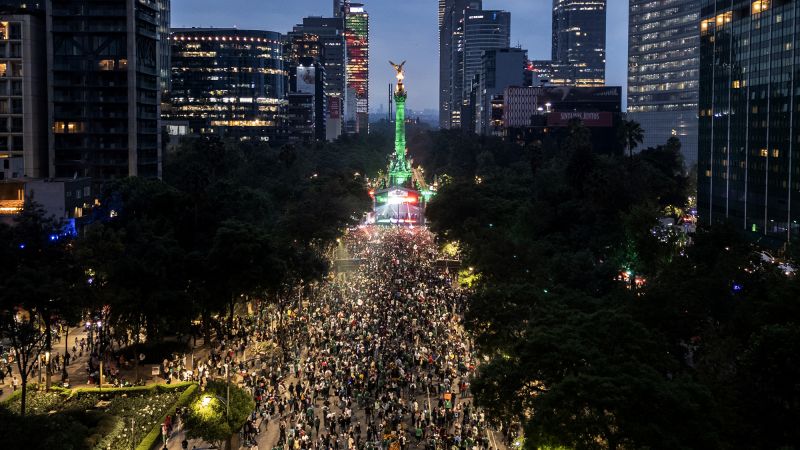
Mexico’s Human Trafficking Survivors Have a Message for World Cup Fans
Sandego.net – As the FIFA World Cup 2026 approaches, the spotlight on Mexico’s vibrant cities and cultural landmarks has sparked worries among survivors of human trafficking. These individuals, who have endured unimaginable hardships, are urging fans to consider the potential risks of the event. With millions of visitors expected to flock to the country, concerns have grown that the influx could be exploited by criminal groups to increase the trade of human beings. This fear is echoed by organizations such as UNICEF, as well as government agencies, private companies, and rights groups, which have launched initiatives like “It’s a Penalty” and “World Cup Without Trafficking” to address the issue.
A Survivor’s Tale
Karla Jacinto’s story began at the age of 12. She was lured by a 22-year-old who promised love, marriage, and a dreamlike life—something she had never imagined as a child. Within days, she moved in with him, unaware that her fate was already sealed. What followed were four years of forced prostitution in a brothel in Guadalajara. “I cried, I screamed, I begged for help, and nobody listened to me until it got to the point where my feelings started to shut down,” Jacinto recounted. Her trauma deepened as she faced tens of thousands of sexual assaults by the time she escaped at 16. Now in her early 30s, she has become an advocate for survivors, sharing her journey to raise awareness about the hidden dangers of the World Cup.
“I can tell you from my own experience that during the time my trafficker sexually exploited me, there was an increase in demand for prostitution during sporting events,” said Mixi Cruz, a 15-year-old when she was forced into the sex trade in Mexico City. Cruz’s words reflect the broader anxiety among survivors that the World Cup’s global attention could fuel the market for exploited labor.
The Fear of Silence
Survivors like Jacinto and Cruz warn that the scale of human trafficking in Mexico is often underestimated. They argue that the country’s infrastructure and cultural atmosphere, while welcoming to tourists, may not be equipped to handle the surge in trafficking cases. “The truth is that Mexico is not currently prepared to host a World Cup,” Cruz stated, highlighting the government’s lack of proactive measures against the crime. This sentiment is shared by many activists who point to systemic corruption and impunity as key factors in the trafficking epidemic.
The World Cup’s 13 matches will be held in three cities: Guadalajara, Mexico City, and Monterrey. These locations, already known for their bustling nightlife and red-light districts, are seen as prime targets for traffickers. According to the 2025 Global Organized Crime Index, human trafficking—particularly for sexual and labor exploitation—has become one of Mexico’s most lucrative criminal enterprises. It is now ranked third behind drug trafficking and firearms, underscoring its growing influence in the country’s economy.
Policing the Challenge
Despite these concerns, some elements of the Mexican government are taking steps to address the issue. Collaborations with NGOs and the private sector have been established to improve reporting mechanisms during the tournament. However, the sheer volume of visitors and the complexity of the trafficking network mean that enforcement may be stretched thin. “The challenge is not just about identifying victims but ensuring they feel safe to come forward,” said Gabriela González García, a director at Mexico City’s Citizens’ Council for Security and Justice. She noted that only about 2% of trafficking cases are reported to authorities, a statistic that many NGOs believe is far too low.
Underreporting is a significant barrier to combating the problem. Survivors often face fear, shame, and a lack of trust in the justice system, making it difficult for them to seek help. Even when they manage to escape, they may hesitate to press charges. “It’s not just about escaping the immediate danger; it’s about overcoming the trauma and the stigma,” explained an activist involved in the campaign. This reluctance to report contributes to the underestimation of the crisis, which remains deeply rooted in Mexico’s social and economic fabric.
Regulation and Exploitation
One factor that complicates the situation is the legal framework surrounding prostitution in Mexico. Thirteen states regulate adult prostitution, creating an environment where traffickers can operate with relative ease. Critics argue that this regulation provides a convenient cover for criminal groups to exploit vulnerable individuals, including minors, in the country’s thriving red-light districts. During a recent tour of these areas, CNN joined Indira Villegas, a senior technical adviser with The Mekong Club, a Hong Kong-based NGO working to combat modern slavery and forced labor. The visit revealed a stark reality: dozens of sex workers were lined up along busy streets, waiting for clients.
While the legal system allows for adult prostitution, it does little to protect children from being trafficked. “The law may not criminalize the act of trafficking minors, but it enables the exploitation of vulnerable individuals,” Villegas pointed out. This contradiction highlights the need for stronger policies that address both the demand for prostitution and the supply of trafficked victims. Activists are pushing for stricter regulations and greater public awareness, emphasizing that the World Cup could act as a catalyst for increased trafficking activity.
Voices of Concern
The fear among survivors is not unfounded. With the World Cup drawing international attention, the opportunity for traffickers to profit from the event is significant. “The influx of tourists creates a new market for exploitation,” said Jacinto, who now uses her story to educate others. She stresses that the problem is not just about the tournament itself but about how the country’s existing vulnerabilities could be amplified by the event’s scale.
Government officials, however, insist that steps are being taken to combat the issue. Mexico’s Secretary of Security and the Secretary for Women have been contacted by CNN for comments, though their responses have yet to be shared. In the meantime, survivors and advocates continue to emphasize the urgency of the situation. “We cannot ignore the fact that the World Cup may be the next chapter in Mexico’s battle against human trafficking,” Jacinto said. “It’s a chance for the world to see the reality we’ve lived for years.”
As preparations for the tournament intensify, the voices of survivors serve as a reminder that the human cost of the event may not be fully accounted for. Their stories, combined with growing international scrutiny, challenge the notion that Mexico is ready to host the World Cup without addressing the deep-seated issues of trafficking. Whether the country can rise to the occasion or if the event will inadvertently fuel the crime remains a question that only time will answer. But for those who have lived through it, the message is clear: the World Cup’s success should not come at the expense of human dignity.