Progressives Look to Colorado as Next Test of a Rising Movement
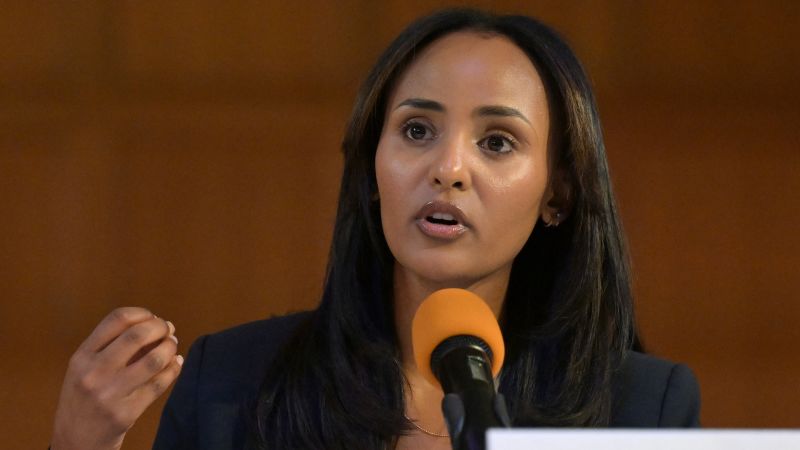
Sandego.net – Following a series of unexpected wins in New York last week, the growing progressive movement has shifted its focus to Colorado, where a pivotal contest in the 1st Congressional District could shape the future of left-leaning politics in the nation. The race has drawn attention as a potential proving ground for the movement’s ambitions, with Melat Kiros, a 29-year-old democratic socialist and attorney, emerging as a key figure in the fight against 15-term Representative Diana DeGette. Kiros’ candidacy represents a bold challenge to the established Democratic establishment, as her supporters aim to leverage momentum from New York’s victories to push for broader change in the Centennial State.
A Battle for Democratic Representation
Kiros, a legal professional and advocate for systemic reform, is vying for the Democratic-held seat in Denver. The district, historically a stronghold for the party, now faces scrutiny as progressive forces seek to test their ability to unseat a seasoned incumbent. “Voters are beginning to see that the party and its leadership are not adequately addressing the needs of working people,” Kiros told CNN. “This is the moment for leaders who will actively champion their causes.” Her message resonates with a demographic that has grown increasingly disillusioned with traditional political figures.
“I think voters have realized that the party and leadership are failing to meet this moment in a meaningful way, and it’s time for leaders who are actually going to be fighting for the interests of working people,” Kiros said.
However, some Democratic insiders caution that Denver’s dynamics differ from New York City, where the movement gained significant traction. Ted Trimpa, a veteran strategist who has played a key role in building Colorado’s Democratic infrastructure, emphasized that the state’s political landscape is unique. “Mamdani isn’t the messiah for Democrats,” Trimpa noted. “If they believe he is, they’re likely misreading the situation. This is a different terrain.”
Colorado’s Political Landscape
Colorado’s political environment presents both opportunities and challenges for progressives. Roughly half of the state’s voters are unaffiliated, giving the race a broader appeal beyond party lines. While Democrats hold both Senate seats and the governorship, the state has a history of electing candidates who balance progressive ideals with pragmatic compromises. This trend has made the 1st Congressional District a critical battleground, as the contest tests whether voters are willing to embrace more radical voices.
DeGette, a longtime Democratic representative, has faced primary challenges before but is now under pressure as the movement gains strength. The primary process in the district requires candidates to secure 30% support from party activists to qualify for the ballot. Both DeGette and Kiros navigated this system, with DeGette narrowly passing the threshold and Kiros outperforming her in the process. This has intensified DeGette’s campaign efforts, as she seeks to solidify her position ahead of the August 1 primary.
Another candidate, University of Colorado Regent Wanda James, secured her spot through voter signatures, highlighting the diverse paths to candidacy in the district. The race has centered on policy priorities, with candidates positioning themselves as defenders of the Democratic agenda against the Trump administration. “I’ve won contested primaries before, and I’m confident about this one,” DeGette stated in a recent interview. “I’m running hard and speaking directly to voters about issues that matter to families here, not just national narratives.”
Progressive Momentum and Strategic Collaboration
Within hours of projected wins by Assemblymembers Claire Valdez and Darializa Avila Chevalier in New York’s primary, Justice Democrats members convened in a group chat to strategize how to amplify Kiros’ campaign. The group, which supports candidates opposed to corporate PACs, has been instrumental in organizing grassroots efforts, including fundraising drives and door-to-door canvassing. “Each race this cycle has built momentum for the next,” said Usamah Andrabi, a spokesperson for the organization. “What’s remarkable is how our candidates who succeed often invest in future efforts, creating a cycle of support and growth.”
Despite the progress, challenges remain. Trimpa warned that the movement must avoid overestimating its influence in Colorado, where the Democratic base is more fragmented. “Democrats in the state are divided between traditionalists and reformers,” he added. “The question is whether voters will align with the new wave of leaders or stick with the status quo.” The outcome could signal a turning point in the party’s ability to integrate progressive voices into its mainstream.
Controversies and Policy Stakes
Kiros’ campaign has also sparked debates over her views on U.S.-Israel relations. The first-time candidate, who previously worked as a lawyer, was dismissed from her firm in 2023 after refusing to remove an open letter that criticized the conflation of student protests against Israel with antisemitism. Her stance has drawn both praise and criticism, with some accusing her of oversimplifying complex issues. Recently, she faced backlash for not labeling a firebombing attack on Israeli hostage supporters as antisemitism, an incident that resulted in one fatality and several injuries.
“Every race this cycle has added more and more momentum to the next,” said Usamah Andrabi, a spokesperson for the group. “What we’ve been really proud of as well is how much every candidate of ours who wins goes on and tries to pay it forward to the next.”
Yet, her opponents argue that these critiques are part of a broader strategy to challenge the party’s moderate wing. “This race is about more than just policy—it’s about who gets to represent the district’s values,” said a Colorado Democratic strategist. “If Kiros wins, it could mark a shift toward more progressive leadership, but if DeGette holds on, it may reinforce the current political balance.” The stakes extend beyond the district, as the outcome could influence the national trajectory of democratic socialism.
A Broader Movement Taking Shape
While the Colorado contest is a critical step, the movement’s reach is expanding beyond New York. From Seattle to Washington, D.C., progressive candidates are gaining ground in cities that have long been Democratic strongholds. The success in New York has emboldened activists, who now see a path forward in other regions. “This is a moment of transformation,” Andrabi noted. “We’re not just fighting for a single seat—we’re redefining what leadership looks like.”
As the August 1 primary approaches, all eyes are on Denver. The race will determine whether the movement’s energy can translate into tangible political power. For Kiros, it’s an opportunity to prove that democratic socialism can thrive in a traditionally blue district. For DeGette, it’s a test of her ability to hold onto a seat that has become a microcosm of the nation’s political divide. The results could set the stage for a broader realignment in the Democratic Party, with implications for the 2028 elections and beyond.