
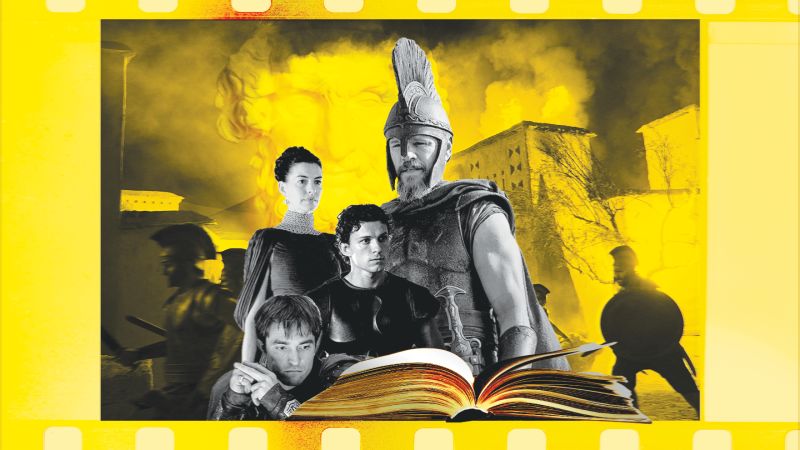
‘Odyssey’ Fever Sweeps Classical Studies Communities
Sandego.net – With Christopher Nolan’s adaptation of “The Odyssey” set to debut on July 17, a global phenomenon is unfolding that transcends the realm of cinema. While moviegoers worldwide are tuning in for a new blockbuster, a parallel surge of enthusiasm is gripping scholars and educators of the ancient world. From university lecture halls to high school classrooms, classics instructors are preparing to capitalize on this anticipated wave of interest in their field. Meanwhile, cultural institutions have launched a series of events and activities inspired by the epic, signaling a renewed fascination with Homer’s timeless tale.
The Odyssey’s Cultural Resurgence
As the film’s release approaches, academic leaders and educators are cautiously optimistic about its potential to revive public engagement with classical literature. For many, the prospect of blending modern storytelling with ancient mythology is a powerful tool to draw students into the world of antiquity. “The adaptation has the potential to bridge the gap between pop culture and ancient texts,” said Nina Papathanasopoulou, a classics professor at College Year in Athens and public engagement coordinator for the Society for Classical Studies. “It could spark a genuine interest in the origins of Western civilization.”
Nolan’s interpretation of Homer’s epic has already captured widespread attention, with universities and museums coordinating programs to align with its launch. In Los Angeles, the Getty Museum is hosting a full day of events in late May, featuring lectures and discussions that draw parallels between the film and the original poem. The event also includes a performance from a folk opera adaptation of the story, underscoring the cross-disciplinary appeal of the work. “We’re excited to see how Nolan’s vision will inspire new conversations,” noted Katrina Kelly, engagement director for the Classical Association in the UK.
From Trojan War to Hollywood’s Spotlight
At the heart of the film is the legendary journey of Odysseus, the Ithacan king whose odyssey home after the Trojan War spans a decade of trials. Matt Damon’s portrayal of the protagonist has sparked debates about how to modernize the narrative, with audiences eager to see how Nolan’s signature style will reshape the tale. The director’s track record with cinematic triumphs, such as “Oppenheimer” (2023), “Inception” (2010), and the “Batman” trilogy, has led Hollywood analysts to predict record-breaking box office figures. Some estimate the film could surpass $1 billion in global sales, echoing the success of Nolan’s previous projects.
Classics teachers, who often teach the history and culture of the ancient Mediterranean, are hopeful that the film will serve as a gateway to deeper exploration of the original text. “When a major filmmaker reimagines a classic, it’s a chance to make the past feel relevant,” explained Jennie Luongo, a Latin instructor at St. Andrew’s Episcopal School in Austin, Texas, and president of the American Classical League. “I’ve already seen students asking more questions about the myths and themes in the poem.” This enthusiasm has translated into practical efforts, such as book clubs and themed events, designed to immerse participants in the story’s nuances.
A Legacy of Classical Revival
The current excitement mirrors past instances where classic works have ignited public interest. For example, Ridley Scott’s “Gladiator” (2000) led to a noticeable increase in book sales and academic engagement, an effect the New York Times famously labeled “the ‘Gladiator’ effect.” That film, which grossed over $460 million and won five Oscars, including Best Picture, also paved the way for a string of similar productions, such as “Alexander” (2004), “Troy” (2004), and “300” (2006), as well as HBO’s “Rome” (2005–2007). These projects collectively reinforced the idea that classical narratives can captivate modern audiences, fostering a broader cultural appreciation.
Emily Wilson, a classical scholar known for her 2017 translation of “The Odyssey,” has become a focal point in the media frenzy. Her work, which Nolan has cited as a key influence, has drawn renewed attention as the film’s release nears. “I’m overwhelmed with inquiries from journalists,” Wilson told CNN. “It’s fascinating to see how the story continues to resonate across different mediums and generations.” This level of visibility underscores the enduring appeal of the epic, even as its interpretation evolves.
Global Initiatives to Amplify the Impact
Efforts to harness the film’s influence are spreading across continents. In Australia, a leading book retailer has organized a month-long series of lectures centered on Homer’s work, culminating in a screening of Nolan’s adaptation in Melbourne. These sessions aim to connect contemporary audiences with the poem’s themes, such as heroism, resilience, and the human condition. “We’ve seen a significant uptick in participation, especially among younger viewers,” said the retailer’s program coordinator.
Meanwhile, in the UK, regional branches of the Classical Association are integrating Homer’s narrative into their book club discussions. Some are even planning film screenings for members, creating a shared experience that bridges academic analysis with popular culture. “The movie has already brought new people to our events, and we’re looking forward to deeper engagement,” Kelly added. In the US, UC Berkeley’s Arts & Humanities department has launched a book club titled “Epic Book Club for the World’s Most Epic Tale,” which includes seven online meetings and draws participants from diverse backgrounds. Organizers were surprised by the overwhelming response, with over 1,300 attendees signing up from around the globe.
These initiatives highlight the collaborative nature of the current wave of interest. Academics, educators, and cultural institutions are working together to ensure that Nolan’s adaptation not only entertains but also educates. “It’s a rare opportunity to engage people with the classics in a way that feels fresh and accessible,” said one university representative. The goal is to create a lasting legacy, much like the “Gladiator” effect, but with a modern twist that resonates with today’s audiences.
The Power of Storytelling Across Time
As the film approaches its debut, the question remains: will it achieve the same cultural milestone as its predecessors? Nolan’s decision to tackle the Odyssey, a foundational text of Western literature, has been met with both admiration and skepticism. Yet, the enthusiasm from educators and institutions suggests that the epic’s themes—courage, perseverance, and the quest for identity—will find new life in contemporary storytelling.
For those in the classics field, the excitement is more than just about a new movie. It represents a chance to reframe how ancient texts are perceived, transforming them from relics of the past into living, breathing narratives. “The Odyssey is more than a story; it’s a mirror to our own struggles and aspirations,” Luongo emphasized. “When people see it through a modern lens, they might start to see their own lives in the characters and settings.”
As the film’s release date nears, the ripple effects are already being felt. The blend of cutting-edge filmmaking and timeless themes has the potential to spark a renaissance in classical studies. Whether through classroom discussions, museum exhibitions, or book clubs, the collaboration between academia and entertainment is setting the stage for a renewed appreciation of Homer’s work. “This is a moment that could redefine how we teach and learn about the ancient world,” said Papathanasopoulou. “It’s not just about the past—it’s about connecting it to the present.”
With the Odyssey’s cinematic revival, the hope is that more people will not only watch the film but also delve into the original text. “If the movie succeeds, it could create a lasting interest in the classics that extends beyond a single weekend at the theater,” Wilson observed. As the world awaits Nolan’s take on the epic, the anticipation for both the film and its cultural impact continues to build.