Uganda’s Military Chief Orders Closure of Two Major Media Outlets
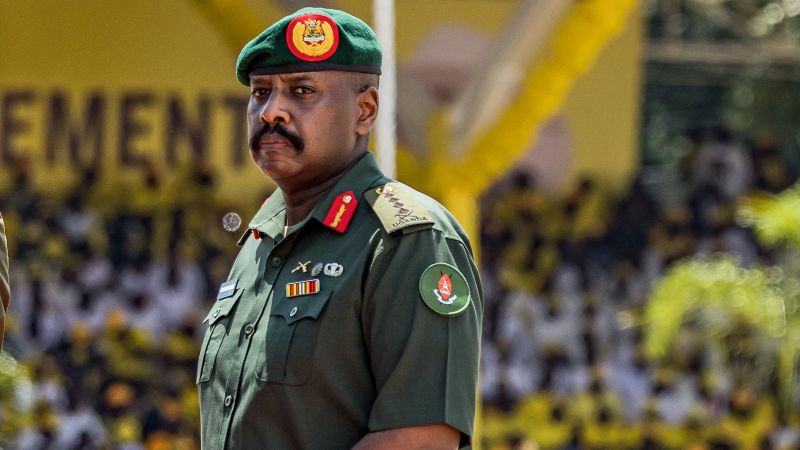
Sandego.net – On Sunday, Uganda’s military chief, Muhoozi Kainerugaba, issued an order to shut down two prominent media organizations, citing a lack of trust in the free press. The directive came as part of a broader move to tighten control over media narratives within the country. Kainerugaba, who is also the son of President Yoweri Museveni, emphasized his belief that the press should align itself with the principles of the revolution, rather than operate independently. This latest action has raised concerns about the government’s growing influence over the media landscape and its implications for press freedom in Uganda.
Media Outlets Targeted by the Closure Order
The affected outlets include the Daily Monitor, Uganda’s largest independent daily newspaper, and NTV Uganda, a significant private broadcaster. Both are operated by Nation Media Group (NMG), a media conglomerate based in Kenya and listed on the Nairobi stock exchange. Kainerugaba stated that these organizations would remain closed until he gave permission for them to reopen. His comments, posted on the X platform, underscored his determination to regulate media output under the military’s oversight.
“In Uganda, I do not believe in a free press! The press should be guided by cadres of the revolution,”
he wrote, signaling a shift in how news is disseminated. The closure has disrupted the flow of information, particularly regarding the activities of the military and government policies. Reports indicate that armed personnel were deployed at NMG’s headquarters in Kampala, the capital, on Sunday morning. Staff members were reportedly restricted from entering or exiting the premises, creating an atmosphere of tension and control.
Background on Nation Media Group and the Closure
Nation Media Group has been a key player in Ugandan journalism for years, known for its independent reporting and critical coverage of political issues. However, the government has periodically targeted the group for its investigative work. In 2013, President Museveni’s administration briefly shut down the Daily Monitor for 10 days after it published articles about succession plans within the ruling party. This historical precedent has fueled speculation that the current closure is part of a strategic effort to suppress dissent and shape public opinion.
Despite the recent shutdown, NMG continues to hold a significant presence in Uganda’s media sector. Its subsidiaries, including NTV Uganda, have been instrumental in providing news coverage to a wide audience. The decision to close these outlets has sparked debates about the role of media in a democratic society and the potential for government interference in news reporting. Critics argue that the move could stifle independent journalism, while supporters claim it is necessary to ensure media adherence to national interests.
Government Response and Reactions
A Ugandan government spokesperson, Alan Kasujja, did not immediately respond to a request for comment from Reuters. This silence has left journalists and analysts questioning the official rationale behind the closure. Susan Nsibirwa, the managing director of NMG in Uganda, also remained noncommittal when asked about the situation, stating she had no immediate remarks. The lack of transparency has intensified concerns about the motives driving the shutdown.
Political observers have noted that Kainerugaba’s actions may be linked to his potential role as a successor to President Museveni. As a key figure in the military and a prominent public figure, Kainerugaba has long used social media to express his views. His recent posts have included provocative statements, such as threats to behead opposition leader Robert Kyagulanyi, commonly known as Bobi Wine. These bold assertions have positioned him as a polarizing figure within Ugandan politics.
The closure of the Daily Monitor and NTV Uganda has also drawn comparisons to past government interventions in the media. In 2013, the Daily Monitor was suspended for a week over its coverage of succession dynamics within Museveni’s ruling party. The current shutdown, however, appears more extensive, affecting multiple platforms under NMG’s umbrella. This suggests a broader strategy to consolidate media power under the military’s direction, with Kainerugaba at the helm.
Implications for Ugandan Journalism
The decision to close these outlets has raised alarms among journalists and media watchdogs. Many fear that the move will lead to self-censorship, as media organizations may feel pressured to avoid critical reporting on government actions. Kainerugaba’s emphasis on aligning with the “cadres of the revolution” implies a desire to ensure media content reflects the priorities of the ruling party, rather than challenging them.
Uganda’s media environment has seen a steady decline in independence over the past decade. The government has increasingly used legal and administrative measures to curb dissent, including the arrest of journalists and the seizure of media assets. The current closure adds to this trend, highlighting the challenges faced by independent news organizations in a country where political influence is pervasive.
Public and International Reactions
While the Ugandan government remains silent, international media and human rights organizations have expressed concern over the closure. Some view it as a deliberate attempt to suppress free speech, particularly in the context of upcoming elections. Others argue that the shutdown is part of a larger effort to strengthen the state’s control over information, ensuring a unified message in the lead-up to key political events.
Analysts also point to the timing of the closure, which coincides with a period of heightened political activity. With Kainerugaba seen as a potential successor to Museveni, the move may be intended to eliminate opposition voices and consolidate power. The Daily Monitor, in particular, has been a vocal critic of government policies, making its closure a symbolic strike against independent media.
As the situation develops, the impact on Uganda’s journalism and public discourse will be closely watched. The shutdown of these two major outlets represents a significant step in the government’s efforts to shape media narratives, raising questions about the future of press freedom in the country. With the military chief’s authority extending to the media, the potential for continued control over information sources appears likely, unless the closure sparks widespread resistance or international pressure.
Despite the immediate disruption, the closure has also been met with mixed reactions from the public. Some Ugandans support the move, believing it will curb misinformation and ensure media serves national interests. Others view it as an overreach, warning of the long-term consequences for democratic accountability. The debate over the closure reflects broader tensions in Uganda between the government’s desire to maintain control and the media’s role as a watchdog of power.
Historical Context and Future Outlook
The closure of the Daily Monitor and NTV Uganda marks another chapter in the long-standing relationship between the Ugandan government and the media. Since Museveni came to power in 1986, the government has maintained a firm grip on the press, often using it as a tool to promote its agenda. The 2013 incident, which saw the Daily Monitor suspended for reporting on succession, is a clear example of this pattern.
Kainerugaba’s current actions may be part of a continuation of this strategy, as he seeks to position himself as a leader in the nation’s political future. His social media presence, which has included aggressive statements and public threats, suggests a willingness to use any means necessary to advance his vision. The closure of the media outlets not only reinforces his authority but also demonstrates the military’s role in shaping the country’s information landscape.
As the days pass, the full extent of the closure’s impact on Ugandan society will become apparent. The government’s decision to control media access could lead to a new era of censorship, where journalists are forced to navigate a more restrictive environment. At the same time, it may serve as a catalyst for renewed efforts to protect press freedom, both domestically and internationally. The future of Uganda’s media will hinge on how this situation unfolds and whether the public and global community respond with solidarity or criticism.