Prediction markets go wild with Taylor Swift-Travis Kelce wedding questions
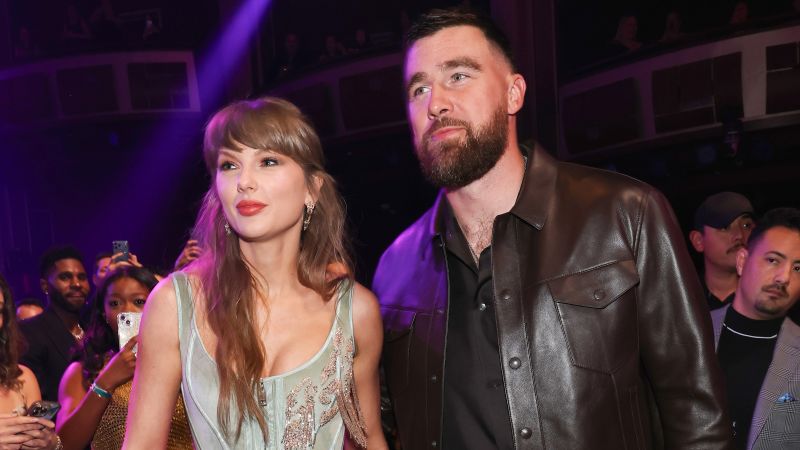
Sandego.net – As the anticipation for a major celebrity union grows, the public is turning to a novel way to express their thoughts: prediction markets. These platforms, which blend elements of gambling and data analysis, are currently flooded with speculation about whether Taylor Swift and NFL star Travis Kelce will tie the knot in 2026. While the couple has been spotted together in New York City this summer, the question of where their wedding will take place has sparked intense debate. Rumors suggest Madison Square Garden might be the venue, thanks to a permit filed to close nearby streets from July 2 to July 4, according to city officials and law enforcement sources. But beyond the location, fans are betting on a wide array of details—ranging from the size of the guest list to whether the newlyweds will find time to watch a World Cup match. This frenzy reflects the growing influence of prediction markets in shaping public discourse around pop culture and sports.
The Betting Boom and Its Impact
Prediction markets have become a fixture in modern society, offering users a chance to wager on everything from political elections to entertainment milestones. Platforms like Polymarket and Kalshi allow participants to buy and sell contracts based on the likelihood of specific outcomes, creating a real-time barometer of public sentiment. Kalshi, in particular, has emerged as a key player in this space, partnering with CNN to provide insights into trending predictions. However, the markets aren’t just about cold data—they’re driven by passionate fans who invest their time and money in hopes of being right. For Taylor Swift and Travis Kelce, the stakes are high, with thousands of users placing bets on a range of scenarios, from the ceremony’s timing to its attendees.
The phenomenon isn’t limited to the couple’s relationship. Prediction markets have expanded to cover a vast spectrum of topics, from sports events to film releases. But when it comes to Swift and Kelce, the fervor is especially strong. Their engagement, announced in August 2025, has already generated a wave of speculation, with many Americans eager to predict the next chapter of their story. A Yahoo/YouGov survey conducted shortly after the announcement found that 77% of respondents had heard at least some details about the engagement, even though only 22% claimed they cared about the specifics. This highlights how prediction markets can turn even the most casual of topics into a national conversation, fueled by curiosity and the thrill of forecasting.
The Details That Matter
Among the most popular bets, the location of the wedding stands out. While New York City is a frequent choice due to its cultural significance and the couple’s appearances there, the possibility of Madison Square Garden has captured imaginations. The permit filed for street closures in July raises questions about the logistics of the event, though it doesn’t confirm a date. Fans are also speculating about who might walk down the aisle with them—potential bridesmaids and groomsmen are being discussed as part of the larger narrative. Some even wonder if the couple will prioritize their personal life over public events, such as the World Cup, which has drawn global attention in recent months.
These predictions are more than just idle gossip—they’re a reflection of how deeply intertwined entertainment and sports are in the American psyche. Taylor Swift, one of the most iconic musicians of her generation, has long been a subject of public fascination, and her relationship with Kelce has only intensified that interest. A UMass Lowell/YouGov poll from March 2026 revealed that 35% of respondents held a favorable view of Swift, while 32% were unfavorable. Another 30% had no clear opinion, leaving just 3% who admitted to never having heard of her. These numbers underscore the cultural ubiquity of Swift, making her personal life a topic of national conversation. The engagement itself, which occurred just months ago, has already become a catalyst for widespread speculation, with prediction markets serving as the ultimate stage for that discourse.
American Life in the Hands of the Public
The rise of prediction markets has transformed how people engage with events, turning speculation into a form of collective decision-making. In this context, the Taylor Swift-Travis Kelce wedding isn’t just a personal milestone—it’s a public event that has captured the imagination of millions. The markets function by aggregating bets, with prices fluctuating based on perceived likelihoods. For example, a bet on the wedding date might see odds shift dramatically as new information emerges. This dynamic process allows for a more nuanced understanding of public sentiment, blending intuition with statistical analysis.
However, the popularity of these markets has also raised questions about their role in modern life. Critics argue that they can create a feedback loop where the act of betting influences the event itself, as media outlets and influencers often amplify the most popular predictions. Yet, proponents see them as a democratic tool that empowers individuals to voice their opinions in a structured, financial way. For Swift and Kelce, the wedding has become a microcosm of this trend, with fans investing in the possibility of a fairy-tale ending. Whether or not the couple actually fulfills these expectations, the markets will continue to thrive, driven by the same blend of hope, curiosity, and risk-taking that defines the American spirit.
As the date of the wedding approaches, the prediction markets will likely see a surge in activity, with new bets and updated odds reflecting the latest news and rumors. The couple’s fans, eager to prove their loyalty, may continue to place wagers on everything from the color of the bridesmaids’ gowns to the presence of notable guests. Meanwhile, the broader cultural impact of these markets grows, as they blur the lines between entertainment, sports, and financial markets. In a world where the outcome of a celebrity’s love story can shape public discourse, the power of prediction markets becomes clear: they are not just about making money, but about participating in the collective dream of what could be.
Even as the betting continues, the question remains: Will the public’s predictions align with reality? For now, the odds are in flux, and the answers are still to be written. But one thing is certain—Taylor Swift and Travis Kelce have become more than just a couple; they’ve become a symbol of the modern age, where the line between personal life and public spectacle is increasingly thin. As their story unfolds, prediction markets will remain a mirror, reflecting the hopes, fears, and fantasies of a nation that never stops looking for the next big event to bet on.