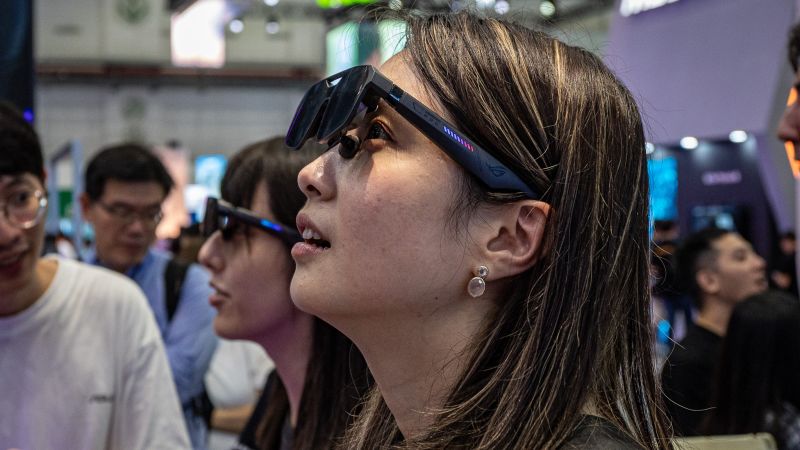
AI Glasses Pose New Challenge to Exam Integrity in Asia
Sandego.net – For decades, students have relied on traditional methods to secure better results in academic assessments—ranging from discreetly glancing at classmates’ papers to hiding notes in their palms. However, as technology advances and the demand for high scores intensifies, a new form of academic dishonesty has emerged: AI-powered smart glasses. In exam-centric regions of Asia, where a single test can determine a student’s future career and social standing, educators are now racing to adapt to this evolving threat.
South Korea and Taiwan Highlight Growing Concerns
Recent incidents in South Korea and Taiwan underscore the increasing prevalence of AI-enabled cheating. In South Korea, students taking an English proficiency exam—often a critical factor in employment decisions—were caught using smart glasses twice last month. Authorities discovered the devices during an inspection, revealing their ability to transmit questions and receive answers in real time. Meanwhile, in Taiwan, a prospective medical student wearing AI glasses during a top university entrance exam was identified after proctors noticed unusual eye movements. The glasses, equipped with heat-emitting technology, were inspected and found to be capable of transmitting data covertly.
These cases are not isolated. Across East Asian societies, where academic competition is fierce, the integration of AI into wearable devices is reshaping the landscape of cheating. As these gadgets become more affordable, sleeker, and sophisticated, their use in exams is escalating. Educators are now forced to rethink long-standing practices, from teaching methods to evaluation systems, to combat this innovation-driven form of dishonesty.
Global Awareness and Regulatory Responses
The issue has sparked international attention. In the UK, the head of England’s exam watchdog recently warned that AI glasses and other smart devices, such as earpieces, could amplify cheating in academic settings. Similarly, China’s education authorities have tightened scrutiny, requiring all candidates to have their glasses checked during the annual college entrance exam, which draws over 10 million participants each year.
South Korea’s college entrance exam administrator acknowledged the problem, stating that the country is collaborating with the Education Ministry and local institutions to develop measures against AI glass misuse. Despite being already banned from exam rooms, these devices are proving difficult to detect. In Taiwan, the university involved in the incident is revising its rules for AI eyewear during assessments, signaling a broader shift toward stricter oversight.
Exam Integrity at Risk: Expert Perspectives
Thomas Corbin, a lecturer at Deakin University in Australia, highlights the growing dilemma. “If we’re seeing a few cases being reported, we’re seeing a lot more cases not being reported,” he said. Corbin’s research on AI glasses in academic contexts reveals that their integration into everyday life is outpacing regulatory frameworks. The devices, which can operate independently and connect to AI models, are becoming so subtle that they challenge conventional monitoring techniques.
Meta’s recent advancements in wearable AI have accelerated this trend. The company’s collaboration with Ray-Ban to launch AI-powered glasses in late 2023 marked a significant step in mainstream adoption. Since then, over seven million pairs have been sold globally, indicating a shift from novelty to necessity. Corbin argues that these devices are as disruptive to exams as ChatGPT was to written essays in 2022, posing a fundamental question about the reliability of current assessment practices.
Testing AI’s Potential in Exams
In a striking experiment, electrical engineering professor Meng Zili at the Hong Kong University of Science and Technology (HKUST) demonstrated how AI glasses could alter exam outcomes. Observing a student wearing stylish glasses during a test, Meng noted their potential and later conducted trials using commercial models. The results were eye-opening: students equipped with AI glasses achieved scores placing them among the top five in a class of over 100, far surpassing the average of 72. This suggests that the technology is not just a tool for cheating but a viable method for enhancing performance, raising ethical questions about its role in education.
Meng emphasized the need to reconsider traditional memorization requirements. “After conducting the experiment, it really raises the question of how much knowledge students actually need to memorize for exams, versus whether we should allow them to use AI during assessment, given what AI is now capable of,” he said. His findings align with broader concerns about the balance between learning efficiency and academic integrity. If AI can provide instant solutions, does that mean exams must evolve to accommodate technology, or should they be redesigned to eliminate such advantages?
Privacy and the Future of Assessment
Experts warn that the rise of AI glasses extends beyond exam rooms. Their ability to process and transmit data independently raises privacy concerns, as they could collect biometric information or monitor student behavior without consent. Zhang Jun, an electrical engineering professor at HKUST, noted that the technology’s integration into daily life means its impact on education is only beginning to be understood.
As AI glasses become more common, the pressure on educational systems to adapt grows. Some argue that exams must transition from paper-based formats to digital platforms that integrate AI tools, ensuring fairness. Others advocate for stricter monitoring, such as thermal imaging or biometric scans, to detect hidden devices. Regardless of the approach, the consensus is clear: the traditional model of assessment is under threat.
Corbin’s cautionary remarks underscore the urgency of this shift. “Wearable AI is as much of a challenge to exams as ChatGPT was to essays in 2022,” he said. “I just don’t think there is any real way that we can reliably have exam practices moving forward.” His statement reflects a growing recognition that the future of education will require balancing the benefits of AI with safeguards against its misuse. As students in Asia continue to exploit these tools, the debate over their role in academic success will shape the next generation of exams.
The ongoing development of AI glasses and their integration into educational environments highlight a critical inflection point. While these devices offer unprecedented access to knowledge, they also introduce new complexities in maintaining fairness. The examples from South Korea and Taiwan serve as early warnings, urging schools and governments to act swiftly. As technology evolves, so too must the frameworks that govern it, ensuring that the pursuit of excellence does not come at the cost of trust in the learning process.