Ancient Papyrus Scroll Unraveled by AI Technology
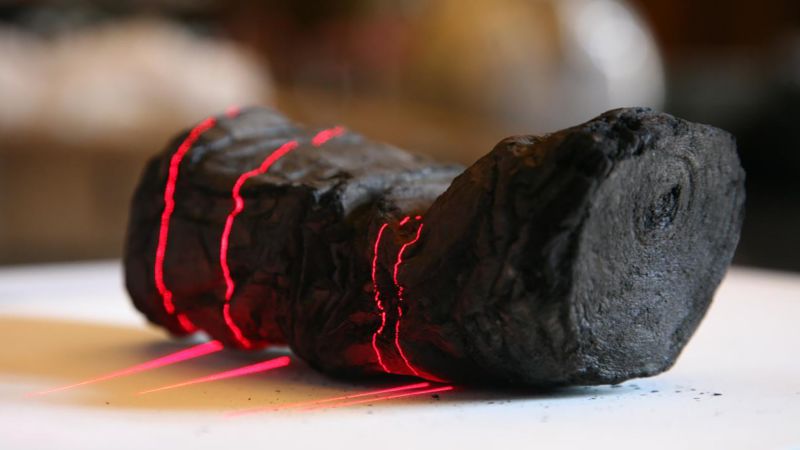
Sandego.net – More than 1,800 years after the catastrophic eruption of Mount Vesuvius, a charred papyrus scroll from the Roman town of Herculaneum has been successfully decoded using artificial intelligence. This remarkable achievement, hailed as a “historic breakthrough,” marks the first time a complete scroll from the site has been fully unwrapped and its contents interpreted without physical intervention. The scroll, designated PHerc. 1667, is now the focus of renewed scholarly interest, offering insights into philosophical ideas from the ancient world.
The Herculaneum Scrolls: A Window into Antiquity
The Herculaneum scrolls, discovered in the 18th century by an Italian farmer, are among the most significant archaeological finds of classical antiquity. Buried beneath volcanic ash and mud during the eruption of Mount Vesuvius in 79 AD, these texts were preserved in remarkable condition, despite the intense heat that transformed them into carbonized artifacts. Unlike the more famous Roman ruins of Pompeii, Herculaneum’s scrolls remain largely intact, though their fragile state has made traditional methods of unrolling them perilous.
Known as the “only large-scale library surviving from classical antiquity,” the collection has long captivated historians and linguists. However, their carbonized form has posed a major challenge: while the physical remains are preserved, the intellectual content has been locked away for centuries. The recent application of AI technology has provided a revolutionary solution, allowing researchers to reconstruct and analyze the texts without risking further damage to the originals.
Overcoming the Challenges of Carbonized Text
The scroll PHerc. 1667, found in a villa believed to have belonged to the father-in-law of Julius Caesar, is a prime example of the difficulties faced by scholars. Its extreme fragility means that any attempt to physically unroll it risks tearing the delicate layers. Over the years, researchers have experimented with weights, chemicals, gases, and even mechanical pulverization to reveal its contents, but these methods often led to partial destruction or unreadable fragments.
To circumvent these issues, the Vesuvius Challenge—a collaborative project launched in 2023 by computer science professor Brent Seales and entrepreneurs Nat Friedman and Daniel Gross—has been pioneering a digital approach. By using advanced imaging techniques and AI, the initiative aims to unlock the secrets of the scrolls without altering their physical state. This method involves scanning the scrolls with high-resolution CT technology, which captures detailed cross-sectional images of the carbonized layers. These scans are then processed to virtually flatten the scrolls, enabling the AI to detect and interpret the ink beneath the charred surface.
The breakthrough achieved this week represents a culmination of years of interdisciplinary effort. By combining expertise in archaeology, computer science, and classical philosophy, the team has developed algorithms capable of recognizing patterns in the ink, even when the text is layered and overlapping. This development not only preserves the scrolls but also opens new avenues for studying the ancient world’s literary heritage.
A Historic Achievement in Digital Deciphering
The recent success in decoding PHerc. 1667 has been described as a “transformational shift” by Federica Nicolardi, an assistant professor of papyrology at the University of Naples Federico II. Leading the team of experts, Nicolardi emphasized how the virtual unwrapping process has changed the way scholars engage with these texts. “For nearly two millennia, many of these texts have been physically preserved but intellectually inaccessible,” she stated in a press release. “Today, after years of collaboration, we are finally able to read them.”
The scroll’s handwriting and internal references suggest it dates back to the second century BC or possibly the late third century BC. This places it among the oldest surviving philosophical works from the Herculaneum collection. The newly translated text explores themes of ethics, arts, and human behavior, with particular emphasis on Stoic principles. Concepts such as “horme”—a term referring to impulse—and “phronesis,” or practical wisdom, are central to the discussion, reflecting the Stoic belief in self-discipline and rational thought as keys to virtuous living.
According to the researchers, the scroll’s content appears to be a philosophical treatise that delves into the nature of behavior and the consequences of uncontrolled passions. The AI-assisted translation includes a line that underscores this theme: “We will inquire into something, but we will not grasp it, if in some way we depart from ourselves and from our own nature.” This insight not only highlights the scroll’s intellectual depth but also its relevance to modern discussions on self-awareness and ethical decision-making.
Expanding the Horizons of Ancient Texts
The progress made with PHerc. 1667 has also led to the discovery of additional content within another carbonized scroll, PHerc. 139. Researchers were able to identify the phrase “Philodemus, On Gods, Book 8,” confirming that the Greek philosopher Philodemus authored at least eight books on the subject. Previously, only the first book was known to have survived, making this revelation a significant addition to our understanding of his work.
Philodemus, a Stoic thinker, is believed to have lived in the first century BC. His writings, often preserved in the Herculaneum collection, provide a unique perspective on Stoic philosophy. The newly uncovered references to “On Gods” suggest that the scroll’s author may have explored the relationship between divine will and human reason. This finding not only enriches the historical record but also demonstrates the potential of AI to uncover previously unknown layers of meaning in ancient texts.
The success of the Vesuvius Challenge has sparked excitement among researchers worldwide. By leveraging cutting-edge technology, the project has proven that digital methods can rival—or even surpass—traditional techniques in uncovering ancient knowledge. The ability to virtually unwrap the scrolls has allowed for the analysis of texts that were once deemed irretrievable, transforming the way scholars approach the study of classical antiquity. As Nicolardi noted, this breakthrough has the potential to reshape our understanding of the intellectual landscape of the ancient world.
The Future of Ancient Text Deciphering
The application of AI to the Herculaneum scrolls is not just a technological feat but also a milestone in the field of papyrology. The virtual unwrapping process has revealed an area of text spanning almost 1.5 meters across 20 columns, a level of detail that was previously impossible to achieve. This achievement has prompted further exploration of the collection, with researchers now focusing on other scrolls that may contain similar insights.
As the project advances, the team is optimistic about the possibilities it presents. The combination of high-resolution imaging and machine learning models has enabled the identification of subtle patterns in ink distribution, allowing for the reconstruction of entire passages. This method has already yielded promising results, and the researchers believe it could be applied to other carbonized texts, potentially unlocking hundreds of years of lost knowledge.
The Vesuvius Challenge’s success also highlights the importance of innovation in preserving cultural heritage. By embracing AI and digital reconstruction, the project has demonstrated that technology can bridge the gap between the past and the present. This approach not only safeguards fragile artifacts but also accelerates the pace of discovery, making ancient texts more accessible to future generations. As the team continues its work, the hope is that more scrolls will be deciphered, shedding new light on the philosophical and literary traditions of the ancient world.