Haiti’s World Cup Journey Ends Amid Legal Uncertainty
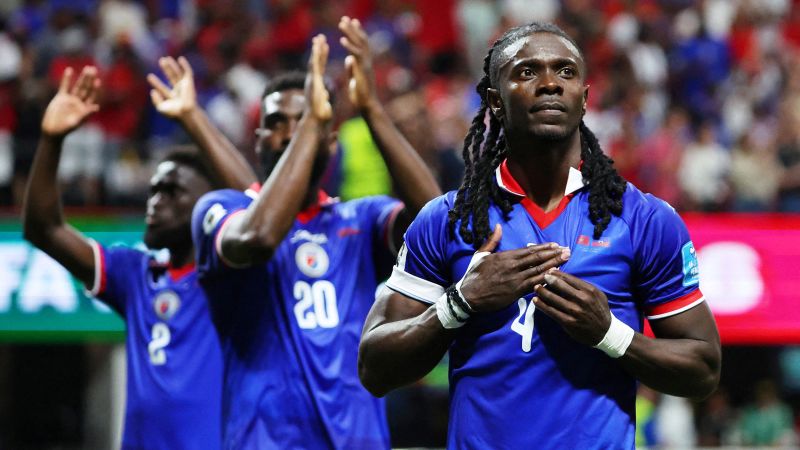
Sandego.net – On Wednesday, Haitian supporters gathered in large numbers in downtown Atlanta to witness the Caribbean nation’s final match of the 2026 World Cup. Though the team fell short of victory against Morocco, the event brought a rare moment of collective hope to a community long accustomed to hardship. Fans wore red and blue jerseys, the colors of Haiti’s national team, and cheered enthusiastically as their countrymen competed on the global stage for the first time since the 1970s. Yet, this joy was soon overshadowed by a sobering development: the U.S. Supreme Court’s decision to grant President Donald Trump authority to terminate the legal protections of Temporary Protected Status (TPS) for millions of immigrants from conflict-ridden nations like Haiti and Syria.
A Nation on the Brink of Displacement
The ruling, announced just days after the World Cup match, could displace over 350,000 Haitians from the U.S. unless they qualify for another form of immigration relief. For many, this decision represents more than a policy shift—it signals the potential loss of livelihoods, safety, and a chance to rebuild their lives in a country that has offered refuge during times of crisis. The impact is especially pronounced in Haiti, where violence has claimed more than 2,300 lives this year and displaced 1.5 million people. Gang activity has intensified, creating a climate of fear that makes returning home seem like a gamble.
Jude Exama, a Haitian citizen living in Atlanta, stood outside the stadium with a sign demanding action to restore peace in his homeland. “I’m not returning,” he said, reflecting on the turmoil that has gripped Haiti. “If tomorrow my country has security, I’ll return,” he told CNN, his voice steady but laced with determination. Exama, once a medical student in Port-au-Prince, arrived in the U.S. two years ago after an armed attack on his university and affiliated hospital left the institution in ruins. Since then, he has worked as a food delivery driver in Georgia, sending money to his family back home. The Supreme Court’s ruling, however, has cast doubt on his future. “I have no choice but to stay in the country,” he explained over the phone. “How do you think I can go and live in a country like that… I would rather starve to death hiding from immigration than live in open hell in Haiti.”
The Weight of Uncertainty on Fans and Families
For Franndy Lesperance, the World Cup match was a celebration of a historic return. The Haitian immigrant, who brought his 10-year-old son to the U.S. in 2023, described the moment as “amazing” after 52 years of absence from the tournament. But the festivities were tinged with anxiety, as Lesperance grappled with the fate of his pending TPS application. “I had in my mind they will not approve (TPS) because this administration doesn’t want foreigners in the country,” he said on Thursday, hours after the Supreme Court’s decision. The ruling, he feared, could strip his family of their legal protections, forcing them to confront the possibility of returning to a nation that feels increasingly unstable.
Lesperance’s journey began in Port-au-Prince, where he worked as a journalist and human rights activist. He fled the capital in 2023 after gang violence escalated, narrowly avoiding kidnapping attempts. His son, now in the U.S., was granted temporary deportation relief, but Lesperance’s work permit is set to expire next year. The TPS program, which allows immigrants from designated countries to remain in the U.S. temporarily, now seems like a distant hope. “I don’t know what’s next,” he admitted, already consulting a lawyer to explore options. For him and others like him, the decision means not just the loss of a chance to stay but also the threat of a return to a country where survival is uncertain.
A Shared Concern Among Haitian Communities
The emotional contrast between the World Cup and the TPS decision was evident at Lakou Fet, a Haitian cultural festival in Atlanta. Attendees enjoyed plates of plantains and djon djon, a traditional rice dish, while discussing the growing crisis in their homeland. Joslin Alberique, a man of Haitian descent, summed up the sentiment: “The situation in Haiti—it’s unbearable right now.” His words echoed the concerns of many who had gathered to support their team, yet were also haunted by the implications of the ruling.
The UN Secretary-General, Antonio Guterres, had recently highlighted the severity of Haiti’s crisis, calling it a “crisis of extraordinary magnitude.” During a visit to the country, he observed how gangs had infiltrated every corner of society, leaving civilians with little choice but to flee or face violence. This reality has made the TPS decision feel like a death sentence for some. “Going back to Haiti will be fatal for us,” Lesperance said, his voice heavy with worry. For families like his, the loss of TPS could mean the end of financial stability, as they rely on income earned in the U.S. to support loved ones left behind.
While the World Cup match offered a fleeting escape from the daily struggles of displacement, the Supreme Court’s ruling brought the looming threat of deportation into sharp focus. For Exama and Lesperance, the two-year period of safety and opportunity in the U.S. may soon come to an end. Their stories are not isolated—they reflect the broader anxiety of a diaspora community that has built its lives in America, only to face the possibility of being uprooted once more. The TPS decision, while a legal tool, has become a symbol of the fragility of their newfound stability.
A Call for Action Amid Crisis
At the heart of the issue is a question of survival. For Haitian immigrants, the U.S. has been a sanctuary during times of political upheaval and natural disasters. Yet, as the Supreme Court’s ruling looms, the country’s image as a safe haven is being challenged. Exama’s sign at the stadium—demanding national dialogue to restore peace—was a reminder that the fight for stability in Haiti is far from over. “We need to talk,” he said, his words a plea for unity and hope.
As the Haitian team stepped onto the field, their performance mirrored the resilience of a people who have endured so much. But their journey also highlights a deeper struggle: the tension between national pride and the fear of displacement. For many, the World Cup was a moment of joy, a reminder of Haiti’s place on the global stage. However, the Supreme Court’s decision has turned that moment into a bittersweet reflection on the challenges ahead. The stakes are high, and the outcome of this ruling could shape the lives of thousands for years to come.
While the U.S. legal system provides temporary reprieve, the future for Haitian immigrants remains uncertain. The ruling may force them to choose between the chaos of their home country and the instability of living in the U.S. without legal status. As Exama and Lesperance navigate this dilemma, their stories underscore the human cost of policy decisions. In a world where millions are caught in the crossfire of conflict, their hopes for safety and stability are as fragile as the TPS protections they now face losing.