Why Adults Are Rekindling Their Love for a 25-Year-Old Kids’ Toy
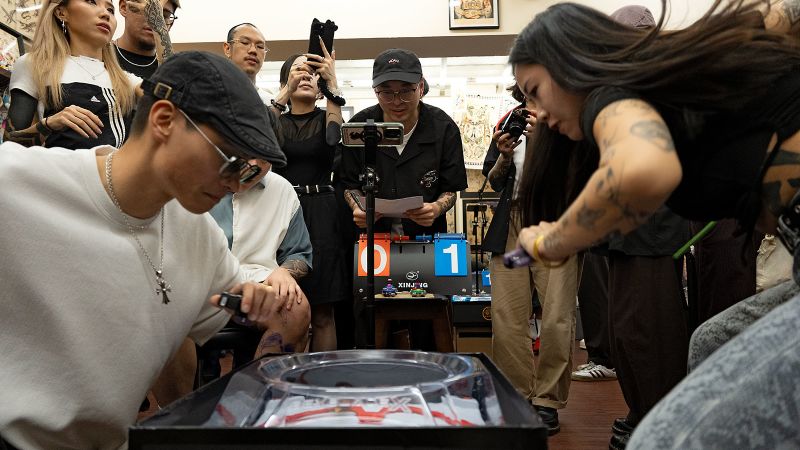
Sandego.net – Once a quiet corner of a Hong Kong tattoo shop buzzed with the sounds of tattoo machines and the chatter of clients seeking inked tigers and dragons. But this week, the scene shifted dramatically. Instead of the usual throng of young patrons, the space now echoes with the rhythmic clatter of steel and plastic as adults engage in high-stakes Beyblade battles. The toy, which first captivated children in the late 1990s, is experiencing a surprising revival across Asia, turning once-playful playthings into a cultural phenomenon for grown-ups.
Beyblade, a Japanese spinning top toy, originally gained traction as a collectible and competitive game. Its design, inspired by traditional beigoma, features customizable tops that are launched using a plastic strip. The toy’s initial success in the early 2000s was fueled by its blend of strategy and kinetic energy, with players assembling intricate models named after mythical weapons and characters. However, the toy’s appeal seemed to wane as children outgrew their fascination with it. Now, it’s making a dramatic return, with adults embracing the same excitement that once defined their childhoods.
The Rise of Adult Beyblade Communities
At The 59 Tattoo in Wan Chai, the space has become a makeshift arena for Beyblade enthusiasts. Tiff Tam, a 28-year-old employee, describes the transformation as both unexpected and thrilling. “I’m ready to put up a fight,” she said, displaying the collection of Beys she’s invested nearly $400 in. The parlor, which once focused solely on tattoos, now hosts weekly tournaments, drawing participants from nearby studios and the local community. “At first, I just didn’t see the appeal,” Tam admitted. “But once I started playing, the tension, excitement, and competitiveness became impossible to ignore.”
Marcus Yuen, the parlor’s founder, echoes this sentiment. Hosting the tournaments has allowed him to relive his own childhood memories. “Kids from my primary school used to gather in the park to play,” he recalled. “But as we grew older, we put our toys aside.” Yuen, now 36 and a father himself, was reintroduced to the game by a younger colleague earlier this year. The experience rekindled his passion, prompting him to transform the tattoo shop into a hub for adult Beyblade enthusiasts. “It’s hard these days to find an event where friends and strangers can come together and play. It’s a pure form of happiness,” he said.
Across the region, the Beyblade craze is spreading beyond tattoo shops. In Tseung Kwan O, a suburban park has become a hotspot for competitive gatherings. Dozens of players have set up makeshift battle stations, lining up to challenge hosts in impromptu matches. The scene is as chaotic as it is entertaining, with participants ranging from teenagers to adults in their 30s. “We play together now even though we weren’t close back then,” said Hui, a co-organiser of the event. “It’s strange how the game has brought us back into the same space.”
The resurgence of Beyblade is not limited to physical spaces. Social media platforms have played a pivotal role in reigniting interest, with viral videos showcasing battles in unconventional locations like Chinese woks and empty parking lots. These posts have sparked a global wave of nostalgia, encouraging fans to reconnect with the toy’s roots. For Tria John Bernard Benito, a 30-year-old participant, the revival was sparked by a friend living in Japan. “I didn’t get to play as a kid because they were too expensive,” he said. “Now, I can afford to buy them and have fun.”
The Economic Impact of the Beyblade Boom
The renewed demand for Beyblade has created a thriving market. In Taiwan and Hong Kong, toy shops often see long lines of fans eager to claim the latest models. Some rare versions, once sold for a fraction of their current price, now command up to $80 on online scalper platforms—ten times more than their original cost. This surge has not only boosted sales but also sparked debates about the toy’s cultural significance. “The revival is quite unprecedented,” noted Leo Tsoi, CEO of Toys “R” Us. “It’s as if the game has found a new generation of players who see it as more than just a pastime.”
Beyblade’s success is a testament to its ability to adapt. While the core mechanics remain unchanged, the toy’s community-driven nature has allowed it to evolve in ways that resonate with modern audiences. Players now treat it as a social activity, combining strategy, skill, and friendly rivalry. In cities like Tokyo and Seoul, adult leagues have emerged, with participants competing in organized matches that mirror the intensity of professional sports. This shift from childhood distraction to adult engagement highlights how nostalgia can bridge generational gaps.
For many, Beyblade represents a return to simpler times. In an era dominated by smartphones and fast-paced digital interactions, the physicality of the game offers a welcome contrast. The act of launching a Bey, watching it spin, and strategizing with fellow players creates a shared experience that feels increasingly rare. “It’s like stepping back into a world where you can focus on the game without distractions,” said a fan at one of the Tseung Kwan O gatherings. “There’s something about the sound of the spin and the competition that feels timeless.”
Industry experts suggest the revival is driven by a combination of factors. First, the toy’s inherent appeal as a competitive challenge remains strong. Its rules—simple yet strategic—allow players to engage in both casual and high-stakes matches. Second, the visual spectacle of the battles, with tops spinning in dazzling arcs and colliding in dramatic fashion, has captured the imagination of viewers. Third, the nostalgic factor cannot be ignored. For many, Beyblade is tied to memories of childhood summers, late-night games, and the thrill of victory. This emotional connection has made the toy a symbol of shared heritage in Asia.
As the trend continues, its impact extends beyond entertainment. Beyblade communities are fostering social bonds, with players forming friendships and rivalries that transcend age and background. The tournaments at The 59 Tattoo, for example, have become a space for collaboration and competition. “It’s not just about winning,” Yuen said. “It’s about the camaraderie and the way the game brings people together.” This sense of community is especially valuable in a society where digital interactions often replace face-to-face connections.
The Beyblade phenomenon also raises questions about the longevity of childhood hobbies. While some may dismiss it as a fleeting trend, the toy’s ability to maintain relevance suggests otherwise. Its resurgence proves that the joy of competition and the satisfaction of customization can endure into adulthood. As more adults embrace the game, it’s clear that Beyblade’s story is far from over. Whether in a tattoo parlor, a suburban park, or a social media feed, the spinning top continues to captivate, reminding players that some childhood passions never truly fade.
With its unique blend of nostalgia, strategy, and spectacle, Beyblade has found a new audience in Asia. The toy’s revival is not just a testament to its enduring appeal but also a reflection of changing social dynamics. In a world where convenience often overshadows connection, the physical and communal aspects of Beyblade battles offer a compelling alternative. As the demand for rare models grows and the number of tournaments expands, it’s evident that the spinning top has become more than a toy—it’s a cultural movement that’s redefining how adults engage with their past and each other.