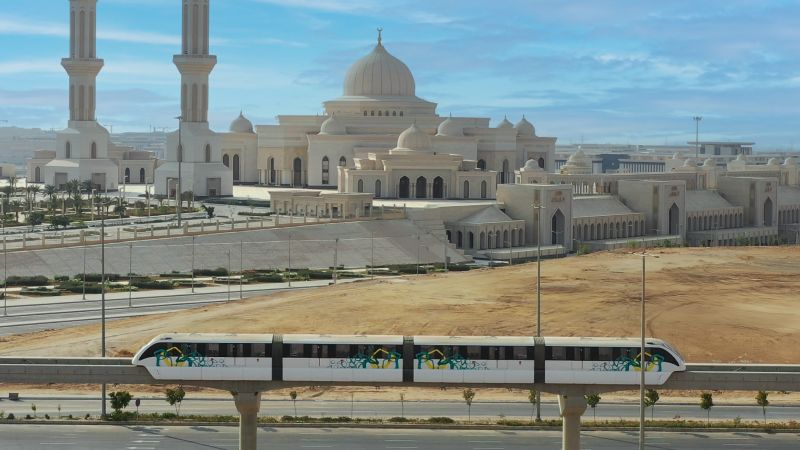
Egypt’s new driverless monorail is riding across the desert
A Vision to Relieve Traffic Congestion
Sandego.net – Cairo, a city steeped in ancient history, faces a modern dilemma: relentless traffic congestion. To address this, the Egyptian government embarked on an ambitious project to build a new administrative capital in the desert, aiming to divert some of the population and reduce the strain on the existing urban infrastructure. Now, an additional layer of relief is being introduced—a driverless monorail system that promises to revolutionize urban mobility. The East Nile line, the first segment of this futuristic network, officially opened to the public on May 6, marking a pivotal moment for Africa’s transportation landscape. This innovation is not just a marvel of engineering but a strategic move to tackle the city’s persistent challenges.
The Monorail’s Technical Marvels
The Cairo Monorail, which began operations in May, is a groundbreaking project for the continent. Unlike traditional rail systems, it operates entirely autonomously, with trains navigating precast concrete beams that soar above the bustling streets of Cairo. The system is designed to transport up to 45,000 passengers per hour in each direction, moving at speeds of 80 kilometers per hour (50 mph). This efficiency is complemented by its eco-friendly features, such as low emissions and minimal noise pollution. Perhaps most impressive is its ability to recover nearly 99% of braking energy, significantly reducing energy consumption and operational costs. The monorail’s design was developed by Alstom, a French rail manufacturer, in collaboration with local partners. The consortium, which includes Cairo-based Orascom Construction and Arab Contractors, manufactured 272 monorail cars at Alstom’s Derby factory in England. The UK Export Finance, a governmental export credit agency, provided partial funding for the project, highlighting international confidence in Egypt’s infrastructure ambitions. The system’s two lines—East Nile and West Nile—will eventually span a total of 100.3 kilometers (62.3 miles), making it the longest monorail network in the world once completed.
From Concept to Reality
The East Nile route, currently operational, connects Cairo International Stadium in Nasr City to the rapidly expanding New Administrative Capital. This 56.5-kilometer (35-mile) line is the first phase of a broader plan to create a sustainable transit solution for Cairo’s growing population. Meanwhile, the 43.8-kilometer (27-mile) West Nile path is under construction, linking 6 October City to Giza. Together, these lines will form an all-electric network that serves as a critical artery for the megacity. The project’s significance is underscored by its potential to alleviate the burden on Cairo’s three existing Metro lines, which currently handle around 500 million annual passengers. Fragmented road networks and frequent traffic jams have long forced commuters to endure hours of delays, prompting the need for an alternative. The monorail’s introduction marks a shift toward modern, high-capacity transit systems, with its automated operation and high-speed capabilities offering a glimpse into the future of urban mobility.
Alstom’s Innovation and Global Context
Alstom’s involvement in the project is a testament to its expertise in advanced rail technology. The company’s Innovia platform, which powers the monorail, has also been deployed in cities like Bangkok, Singapore, and Los Angeles, showcasing its adaptability to diverse environments. The system’s fully automated functions—from starting and stopping to door operation and emergency response—rely on a high-bandwidth radio signaling network that tracks train positions in real time. This ensures seamless coordination and minimizes human error. While the Chongqing monorail in China holds the title of the world’s longest monorail at 98.5 kilometers (61.2 miles), Egypt’s network is poised to surpass it by 1.8 kilometers (1.1 miles) once both lines are completed. The monorail’s capacity to handle 500,000 daily passengers is expected to ease congestion in key areas, particularly near the New Administrative Capital, which is being developed as a hub for government and commercial activity. However, challenges remain. As of now, only six of the East Nile line’s 22 stations are operational, with the consortium committed to delivering full service within the next few years.
Economic Challenges and Skepticism
Despite its promise, the monorail project has faced scrutiny. Critics argue that Egypt’s recent infrastructure investments, including the new administrative capital and the monorail, come amid an economic downturn. According to the US International Trade Administration, the country has already spent roughly 1.7 trillion Egyptian pounds ($106.3 billion) on infrastructure between 2023 and 2025, pushing its external debt to over $163 billion last year. Some locals question whether the monorail will significantly reduce commute times for Cairo’s workforce, especially as the first three days of free rides were met with mixed enthusiasm.
A Broader Picture of African Development
The monorail’s launch is part of a larger trend of infrastructure development across Africa. For instance, Ethiopia is constructing its largest airport, investing $12.5 billion in the project to boost regional connectivity. Similarly, Egypt’s efforts reflect a continent-wide push to modernize transportation systems and support economic growth. However, the success of such initiatives depends on their ability to integrate seamlessly into existing networks and meet public expectations.
Future Prospects and Adaptability
Alstom emphasizes the monorail’s scalability and adaptability. “Its architecture allows capacity to be progressively increased—through service frequency, system optimization and fleet expansion—without compromising reliability or requiring disruptive infrastructure changes,” a representative told CNN via email. This modular design is a stark contrast to older transit systems, which often face capacity limitations from the outset. The company’s confidence in the system’s long-term viability is evident, as it is slated to operate for 30 years with ongoing maintenance and upgrades.
Designing for Tomorrow’s Needs
The monorail’s success hinges on its ability to grow alongside Cairo’s urban expansion. With a focus on sustainability, the system’s energy-efficient features align with global efforts to reduce carbon footprints. The use of precast concrete beams not only minimizes environmental impact but also ensures durability in Cairo’s challenging climate. These elements position the monorail as a model for future transit projects in the region.
Lessons from the Past and Hopes for the Future
While the monorail’s technical specifications are impressive, its implementation has not been without hurdles. Originally scheduled for 2023, the East Nile line faced multiple delays, raising concerns about its timeline and financial sustainability. Yet, the consortium remains committed to its 30-year operational commitment, which includes maintenance, expansion, and integration with other transport modes.
Public Reception and Ongoing Adjustments
The initial public response to the monorail has been cautiously optimistic. Free rides in the first three days drew crowds, but early feedback suggests that some commuters are still skeptical about its practicality. Questions linger about whether the monorail will effectively integrate with existing Metro lines or whether its limited station coverage will deter usage. Nevertheless, the project’s proponents highlight its potential to set a new standard for urban transit in Africa, combining innovation with the need for scalable solutions.
Conclusion: A Step Toward a Connected Cairo
Egypt’s new driverless monorail represents a bold leap into the future of transportation. By addressing the city’s growing mobility needs, it aims to transform Cairo into a more efficient and sustainable metropolis. While challenges such as economic constraints and operational delays remain, the project’s long-term vision and technological advancements offer hope for a better tomorrow. As the East Nile line continues to serve passengers and the West Nile route nears completion, the monorail stands as a symbol of Egypt’s commitment to innovation and its aspiration to lead Africa’s transit revolution.