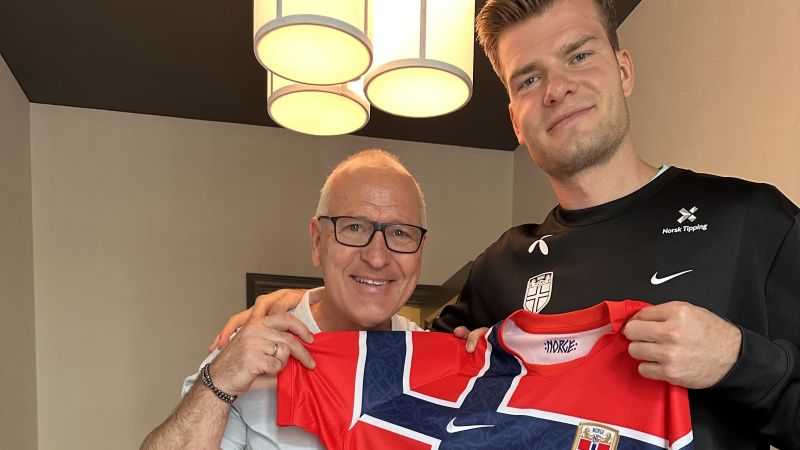
Norway’s Soccer Legacy: Three Players Continue Their Dads’ World Cup Journey
Sandego.net – How three Norway players are continuing the legacy of their fathers’ 1994 World Cup征程 has become a defining story in the nation’s sporting history. The 1994 tournament, held in the U.S., marked a pivotal moment for Norway as it showcased the early seeds of a soccer dynasty. Today, a new generation of athletes is carrying forward the same spirit, with three players stepping onto the field in a way that mirrors their parents’ paths. This generational overlap highlights a rare yet powerful tradition, where the dreams of a past team now live on through their children, uniting history with present-day success.
The 1994 Tournament: A Foundation for Future Generations
The 1994 World Cup was a turning point for Norwegian soccer, as the team made its debut after decades of obscurity. Though they fell short in the group stage, the players who competed then laid the groundwork for a future where their children could one day claim victory. For the families of those athletes, the tournament became more than a sporting event—it was a catalyst for ambition, instilling a sense of purpose that would guide their sons into the professional ranks. The emotional weight of this legacy is palpable, as today’s players honor the sacrifices and hopes of their predecessors.
“It’s like a fairytale that is coming true,” said Gøran Sørloth, reflecting on the surreal experience of watching his son lead the charge. “I’ve been there before, supporting the team, and now I’m seeing it through my own child’s eyes. That’s what makes this moment so special.”
Sørloth’s father, Alexander, had been a key figure in Norway’s 1994 squad, and the same team that once struggled for a place in the final is now being propelled by his son. This intergenerational connection is not unique to Sørloth but is shared by several players whose fathers were part of the historic 1994 team. The path from near-miss to sustained success is now being written anew, with the current squad’s achievements standing as a tribute to the past.
A Legacy of Resilience and Opportunity
The convergence of these three players is a testament to Norway’s evolving soccer culture, where the dream of international success is now more accessible than ever. Patrick Berg, for instance, inherited the passion of his father Ørjan, who represented Norway in the 1994 tournament. Similarly, Kristian Thorstvedt followed in his father Erik’s footsteps as a goalkeeper, yet his journey was shaped by unexpected opportunities rather than guaranteed paths. Their stories underscore the blend of dedication and serendipity required to carry forward a legacy, turning the hopes of their parents into their own.
“We don’t have to live out our ambitions through our sons,” said Thorstvedt. “The most important thing is letting them enjoy football and make it the thing they love most in life. That’s what matters, not just winning.”
For families like the Thorstvedts, the 1994 World Cup was a benchmark—a starting point that now feels like a distant yet meaningful chapter. Erik Thorstvedt, as a former goalkeeper, carried the burden of expectation, yet his son’s performance has eased that pressure. The current generation’s success is a validation of the 1994 team’s perseverance, proving that the dreams of the past can become reality for the present.
How three Norway players continue their fathers’ World Cup legacy is evident in their shared determination to elevate the nation’s standing on the global stage. The 1994 squad’s heartbreak has been transformed into motivation, with the current team’s achievements reflecting a commitment to overcoming past limitations. This trajectory is not just about individual success but about creating a ripple effect that inspires future generations to pursue their own dreams in soccer.
Building a New Era of Norwegian Soccer
How the nation’s sports ethos fosters opportunity is perhaps best illustrated by the journey of players like Alexander Sørloth, who transitioned from handball to football. The 1994 World Cup served as a catalyst for this shift, showing that even in defeat, there was a spark of potential. Today’s team, bolstered by the likes of Erling Haaland’s father Alf-Inge, is a product of that spark, with families playing a crucial role in nurturing talent across generations. This approach has allowed Norway to build a soccer culture that thrives on continuity and growth.
As the World Cup spotlight shines on Norway once again, it’s clear that the legacy of 1994 is far from forgotten. How three Norway players are continuing their dads’ journey is a story of resilience, passion, and shared ambition. Their presence on the field not only honors the past but also redefines the future, ensuring that the spirit of the 1994 team lives on in every goal, every victory, and every new chapter of Norwegian soccer history.