
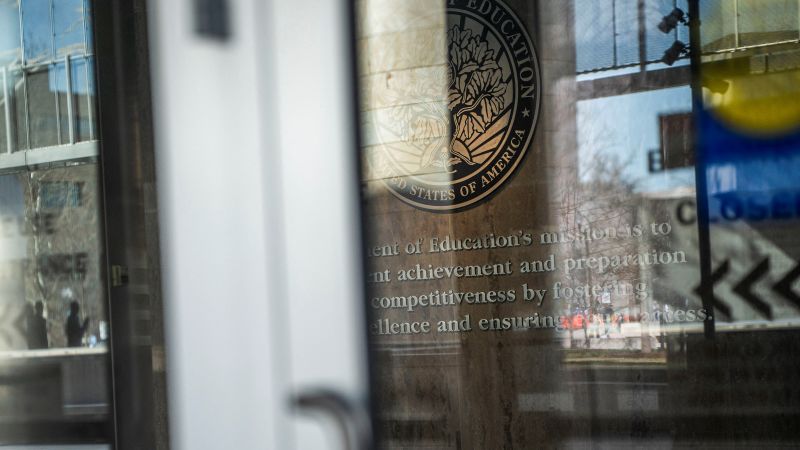
Families of Kids with Disabilities Warn of Education Department Changes
Sandego.net – Families of kids with disabilities are raising concerns about recent reforms proposed by the Education Department. Parents have long struggled with the slow response of the department to issues like bullying and discrimination in schools. Many have faced prolonged waits for resolution, with cases lingering under the Trump administration. Now, with the shift of key responsibilities to other federal agencies, advocates are worried the system may become even more challenging for families to navigate. The changes—transferring civil rights oversight to the Justice Department and special education management to the Department of Health and Human Services—represent a move to reduce the Education Department’s role, a plan highlighted during Trump’s campaign.
A Restructuring of Federal Education Oversight
The new framework redefines the roles of federal agencies, with the Office for Civil Rights handing over complaints about discrimination to the Department of Justice. Special education, which has traditionally been managed by the Education Department, now falls under HHS. This restructuring has sparked alarm among advocates, who argue it may weaken protections for students with disabilities. “The system is already struggling, and this shift could make it harder for families to get help,” said Nicole May, an Ohio mother. Her daughter’s unresolved case, involving bullying due to hearing aids and classroom challenges, has been pending for over two years after she filed it with the Office for Civil Rights.
Special education experts warn that placing oversight in a health-focused department could overlook the unique educational needs of students with disabilities. “Disabilities are not just medical conditions—they’re also about access to learning,” noted one advocate. This contrast between educational rights and health-centric policies highlights concerns about the potential impact on students. Education Secretary Linda McMahon defended the changes, stating they would streamline support for families. However, critics point to the backlog of unresolved cases and reduced staff as evidence of the system’s growing ineffectiveness.
Stagnant Progress Under the Trump Administration
The Education Department’s civil rights office has become a focal point for families seeking justice in schools. Yet, since Trump took office, the office has faced significant challenges, including a 40% reduction in staff. This has led to delays in resolving complaints, leaving families without clear avenues for redress. “The process is slower now, and families are frustrated,” said Emily Harvey, a legal director at Disability Justice. Her cases, including one about Colorado schools rejecting enrollment for students with disabilities, have remained unresolved for months. The shrinking workforce has further strained the department’s ability to address the needs of families of kids with disabilities.
With fewer staff, the Office for Civil Rights has struggled to keep up with the volume of complaints. Similarly, the Office of Special Education and Rehabilitative Services has lost a third of its personnel since 2024. These cuts have created gaps in support for families, who now face longer waits for decisions. Meanwhile, the Justice Department’s Education Opportunities Section has also seen staff reductions, raising fears about its capacity to handle the increased workload from schools. For families of kids with disabilities, these changes have deepened their sense of urgency and frustration.
State-Level Responses to Federal Shifts
As federal agencies grapple with reduced capacity, some states have stepped in to address gaps. In Colorado, a new law signed in May allows state officials to handle civil rights cases that were previously managed at the federal level. This includes disputes over discrimination and harassment, which are now accessible through state systems. While this initiative has provided some relief, it also underscores the growing reliance on state governments to support families of kids with disabilities.
Other states have expanded their own oversight mechanisms, but these efforts have not fully replaced the need for national guidance. Advocates like Craig Haller, a Boston-area expert, have redirected more focus to state-level processes. Haller recently used a state system to resolve a complaint about a school that failed to follow a student’s individualized education plan. While state actions have helped, they lack the comprehensive reach of federal programs, leaving many families of kids with disabilities still in need of stronger support.
Families of kids with disabilities continue to voice their concerns, emphasizing the importance of accessible education and fair treatment. Their experiences highlight the need for a balanced approach that maintains the Education Department’s role in safeguarding these rights. As reforms take effect, the voices of these families will be critical in shaping the future of special education and civil rights enforcement in schools.