‘Who are we cheering for?’ Iranian Americans face their most complicated World Cup
Sandego.net – As the World Cup kicks off in the United States, a unique dilemma has emerged among Iranian Americans. The tournament’s first match, featuring Iran’s national team, is set to take place at SoFi Stadium in Inglewood, California, under a shadow of geopolitical tension. For the first time in the event’s history, a host nation—America—is at odds with one of its competitors, Iran. This has turned the stadium into a symbolic battleground, where fans grapple with loyalty to their heritage and their political beliefs. The situation is further complicated by the presence of Iranian Americans who play for local teams, such as Arya Football Club, a recreational league in the San Fernando Valley. Their players, many of whom are second-generation immigrants, now find themselves torn between pride in their Iranian roots and the broader implications of supporting their country’s team in a war-torn context.
A flag divided: tradition vs. ideology
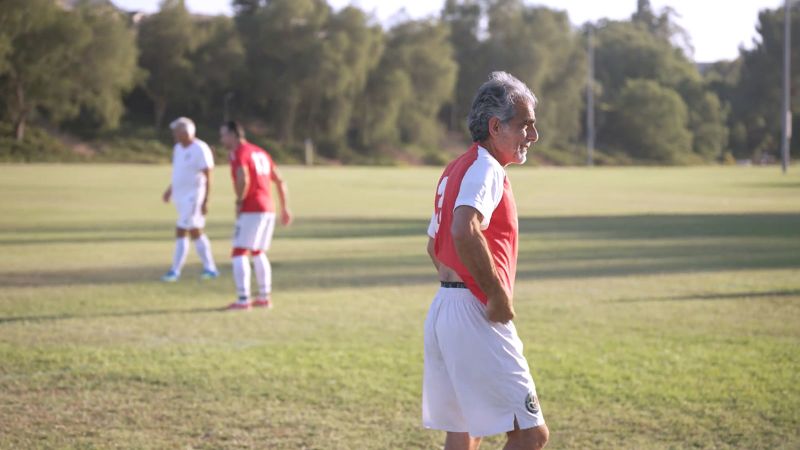
The Iranian flag, with its red, white, and green colors, is a familiar sight in the stands. But for some, its design feels like a political statement. Nader Adeli, a 65-year-old captain of Arya FC, recently showcased the club’s jersey, which features the traditional colors. “We are Iranian! We are Aryan, alright?” he joked, highlighting the team’s cultural pride. However, the national team’s flag—adorned with an Islamic emblem and the Arabic phrase “Allahu’ Akbar”—has sparked debate. Ramin Ghashghaei, a 61-year-old Arya FC defender and immigration attorney, expressed his discomfort with the emblem. “This is not my flag. To me, that’s a terrorist organization, period,” he said, emphasizing the flag’s association with the Islamic regime. Many Iranian Americans, he noted, prefer the Sun and Lion flag, a symbol of pre-revolutionary Iran that represents a more secular identity. This flag, featuring a golden lion gripping a curved sword, has become a rallying point for those who view the current government as oppressive.
“You’ve probably heard of the dilemma between the Allah in the middle and the sun and lion,” Adeli remarked. “I wanted the design to honor our heritage without stepping into political territory.”
FIFA’s stadium code of conduct has added to the tension. The organization explicitly bans “banners, flags, apparel, and other paraphernalia of a political, offensive, or discriminatory nature” from World Cup venues. This rule has been invoked to question whether fans can display the Sun and Lion flag, causing frustration among Iranian Americans. Despite the policy, a protest is planned outside SoFi Stadium during Iran’s opening match, reflecting the community’s deepening divide. The conflict isn’t just about flags; it’s about how the sport is perceived in a nation where politics and identity are inextricably linked.
War and the World Cup: a clash of values
Iran’s participation in the World Cup has reignited debates about the country’s political stance, especially in the wake of the February 2026 airstrikes that killed Supreme Leader Ali Khamenei. In Westwood, a neighborhood often called “Tehrangeles,” crowds celebrated the event, chanting “Thank you, President Trump” and “Thank you, Bibi Netanyahu” while waving Sun and Lion flags. The strikes, which targeted Iran’s military infrastructure, were seen by some as a step toward regime change. Yet others questioned whether the human toll of the conflict was justified, and whether Trump’s motives were purely strategic. The war has since continued for over 100 days, with both sides signaling an impending agreement, but the debate over Iran’s role in the global arena remains unresolved.
For Iranian Americans, the World Cup has become more than a sporting event. It’s a reflection of their dual identities and the political tensions that shape their lives. The team’s presence in the U.S. has prompted questions about loyalty: Is supporting Iran’s national squad a way to honor cultural ties, or does it align with a regime that some view as authoritarian? Ramin Ghashghaei, who plans to boycott the tournament, argues that the team is no longer a true representation of Iranian identity. “In Iran, everything is about who you know, who you buy, political ideology,” he said. “If you support the Islamic Republic, you might get a spot on the team. That’s just a political move.” His sentiment is echoed by others who believe the national team is a tool for the government to consolidate power.
“I love soccer—soccer is inherently part of Persian culture,” said Omeed Askary, a 26-year-old Iranian American attorney in New York. “We talk about it in family gatherings, with elders, youngsters, women, and men cheering together. That’s beautiful.”
Askary, however, draws a distinction between personal loyalty and political alignment. He compares Iran’s team to the U.S. squad, noting that he supports American athletes without endorsing the entire government. “I’m an American. I want my team to succeed,” he said. “Does that mean I support President Trump, ICE, or military operations? Not necessarily. I still want my team to do well.” His perspective highlights the complexity of identity for Iranians abroad: they can embrace their cultural heritage while critiquing the political systems that shape it. Yet, the World Cup has amplified these tensions, as the team’s presence in the U.S. becomes a focal point for ideological conflict.
A cultural crossroads: sports as a mirror of society
The situation underscores how deeply politics intertwines with daily life for Iranians in the diaspora. Arya FC, a team that plays in the San Fernando Valley, represents a microcosm of this struggle. Its players, who are either Iranian or Iranian American, are caught between the traditional values of their ancestors and the modern realities of life in the U.S. For Adeli, the club’s jersey is a symbol of unity and pride, even as the national team’s flag becomes a point of contention. “Football brings people together,” he said, but the team’s political associations complicate that sense of togetherness.
The controversy extends beyond the field. Iranian Americans have been vocal about their frustrations with the U.S. government’s policies toward Iran, such as visa delays and travel bans. These restrictions have made it harder for fans to attend matches or express their support freely. Meanwhile, the stadium’s rules force them to choose between showing their heritage and adhering to international guidelines. For some, this is a small but significant sacrifice. For others, it’s a symbol of the broader conflict between their home country and their adopted nation.
Despite the challenges, the World Cup offers a rare opportunity for Iranians abroad to reconnect with their roots. The tournament, which occurs once every four years, is a global spectacle that unites people across borders. Yet for Iranian Americans, it’s also a test of where their loyalties lie. As the first match day approaches, the community is left to ponder: Is this a celebration of identity, or a reminder of the divisions that define their existence? The answer, it seems, may not be as simple as the colors of a flag.
The geopolitical tensions have also sparked discussions about the role of sports in diplomacy. While FIFA’s stance on political flags aims to keep the tournament neutral, it has instead intensified the conflict. For Iranian Americans, the choice to support their country’s team is not just about love for the sport, but about affirming a sense of belonging in a world where their heritage is often politicized. As the crowd cheers and the game begins, the question of who they are cheering for—rooted in history, culture, and conflict—remains as urgent as ever.