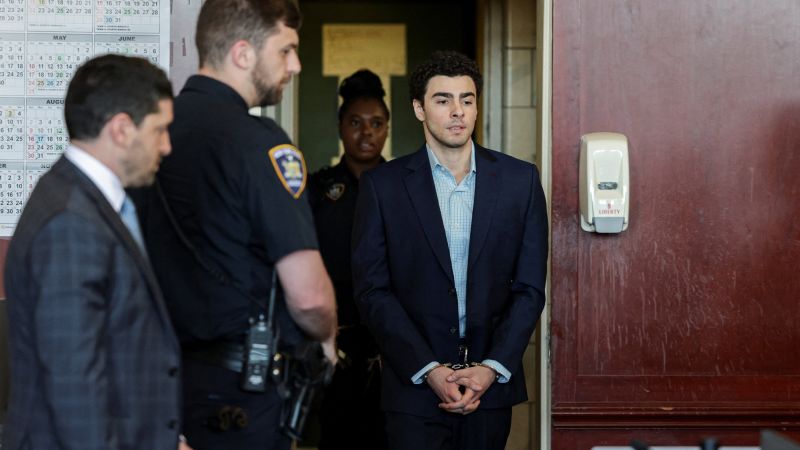
Luigi Mangione’s Psychiatric Defense Could Be Key in State Trial, Experts Say
Sandego.net – Luigi Mangione, the 28-year-old accused of fatally shooting UnitedHealthcare CEO Brian Thompson in December 2024, is increasingly seen as a strong candidate for a psychiatric defense in his state murder trial. Legal analysts and psychologists argue that this strategy might be his best chance to shift the narrative from premeditated violence to a psychological breakdown. With the trial set to begin in September, the defense team is working to present a compelling case that could sway jurors’ perceptions of Mangione’s intent and mental state.
The Role of Mental Health in Criminal Defense
Experts emphasize that a psychiatric defense hinges on demonstrating that Mangione’s actions were influenced by a mental condition at the time of the crime. Karen Friedman Agnifilo, a former Manhattan District Attorney and CNN legal analyst, has noted that such a defense could help explain the shift in Mangione’s behavior. “The evidence is so strong that the defense may be considering an insanity claim,” she said. “Luigi was a valedictorian, came from a prominent family, and had a successful career, but his mental state appears to have undergone a dramatic change.”
“Jurors always want to understand why, and a psychiatric defense could provide that explanation,” Mohandie added, highlighting how it might transform Mangione from a cold-blooded killer to a defendant driven by emotional turmoil.
Strategies and Evidence Gathering
Mangione’s legal team has been moving cautiously, requesting additional time to decide whether to file a psychiatric defense. This delay suggests they are weighing the potential benefits against the risks. The defense aims to present evidence of Mangione’s psychological state, such as his writings and interactions leading up to the shooting. Legal experts stress that a successful defense requires both a strong mental health argument and an acknowledgment of his actions.
Recent court hearings, which were sealed at the defense’s request, indicate that the team is compiling critical information. While no formal announcement has been made, the preparation for a psychiatric defense is evident. If launched, it could become the central theme of the trial, framing the case as a product of Mangione’s internal conflict rather than a premeditated attack.
Humanizing the Defendant: A Psychological Narrative
Forensic psychologist Kris Mohandie believes a mental health defense could be pivotal in connecting with jurors. “If the defense can show that his thoughts were distorted, it might make him more relatable,” Mohandie explained. This approach seeks to humanize Mangione by linking his actions to a deep-seated frustration with the healthcare industry. The defense is also exploring how his personal struggles, including recent back surgery and a mother’s missing persons report, could support the claim of mental distress.
“This gets you the ability to talk about a lot of the underlying factors, like his thoughts on the healthcare system,” Mohandie said, suggesting that the defense might use his anger as a key element in the psychiatric argument.
Public Perception and Media Influence
Despite the gravity of the crime, Mangione has garnered a mix of public support and scrutiny. Supporters argue that his actions reflect a justified rage against the healthcare industry, while critics label him as a dangerous individual. The media has played a role in shaping this debate, with some outlets highlighting his potential for a psychiatric defense and others focusing on the brutal nature of the act.
Mangione’s social media activity and online presence have also sparked discussion. His decision to share an X-ray of his spine before the shooting raised questions about his physical condition, which could be tied to his mental state. Legal experts caution that while these details are intriguing, they must be woven into a cohesive argument to be effective in court.
Challenges and Opportunities Ahead
While a psychiatric defense offers a pathway to a not guilty verdict, it is not without challenges. The defense must convince jurors that Mangione’s actions were a direct result of his mental condition, rather than a deliberate choice. This requires presenting clear evidence of his psychological state, such as medical records or expert testimony, without undermining his accountability for the crime.
As the trial approaches, the focus on Mangione’s mental health could shape public opinion and influence jury deliberations. Whether this defense succeeds depends on how effectively the legal team can humanize him while addressing the motivations behind the attack. The outcome may set a precedent for future cases involving mental health and criminal intent.